
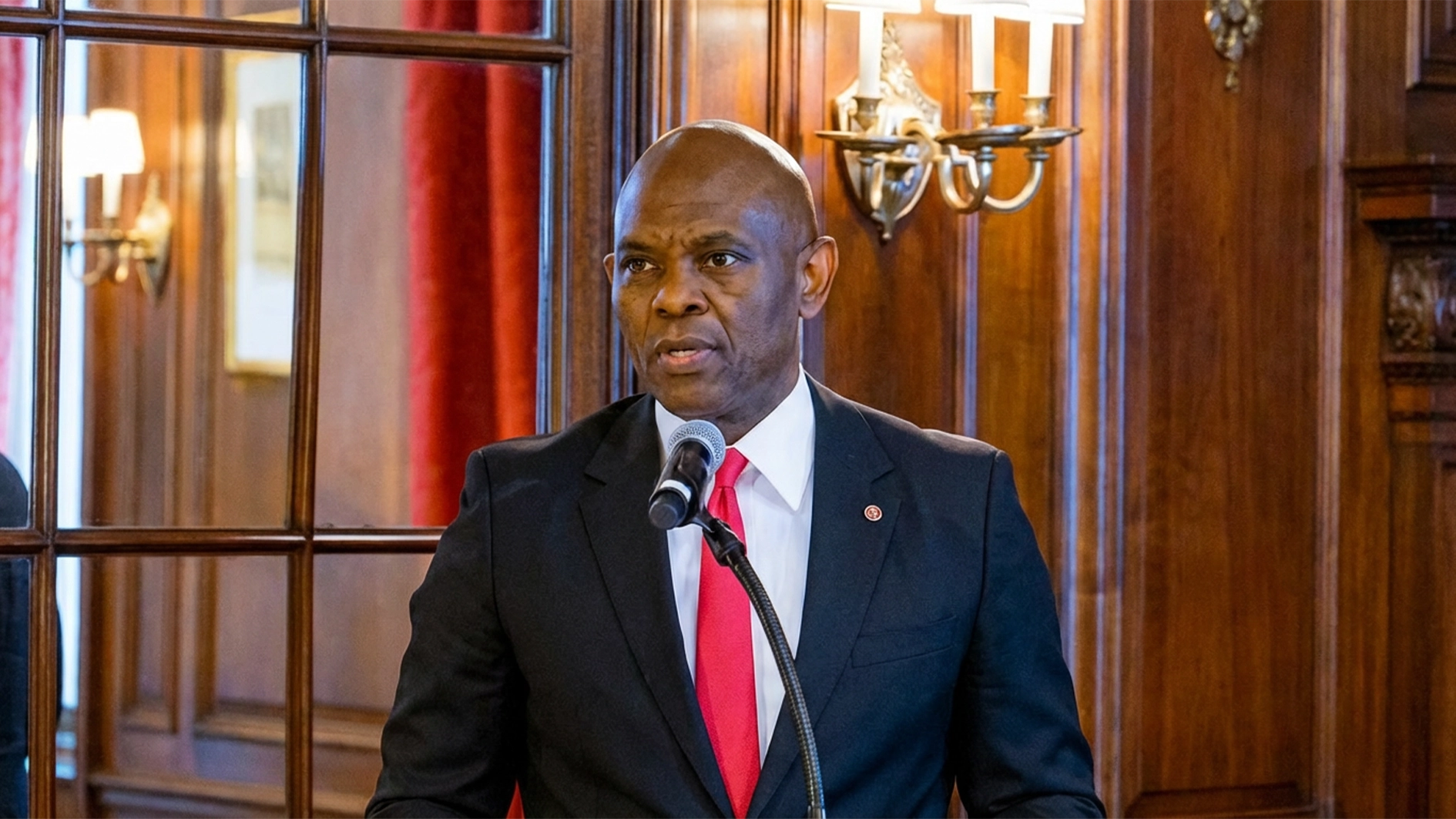
A brief exchange between United Bank for Africa Chairman Tony Elumelu and a young graduate trainee has ignited a wider conversation about workplace etiquette, respect and the growing culture of first-name greetings in Nigerian corporate environments.
Also read: 2025: WAEC detects errors in results, directs candidates to recheck scores
The incident occurred during the graduation ceremony of UBA’s Graduate Management Accelerated Programme, where 374 young professionals were celebrated after successfully completing the programme.
During an interactive session, a female trainee addressed the business leader simply as “Tony”. Elumelu immediately interrupted to correct her, explaining that he did not subscribe to what he described as “Oyinbo life” and indicating that she should address him more formally.
The exchange was captured on video and subsequently circulated widely online, generating reactions from Nigerians who debated whether seniority and workplace hierarchy should determine how colleagues address one another.
For some, the incident highlighted the importance of respecting established workplace protocols, particularly when interacting with senior executives. Others viewed the episode as part of a broader generational debate over whether first-name communication should be encouraged in modern workplaces.
Elumelu’s response, however, was less about the young woman herself than about a cultural distinction he wanted to make.
His remarks reflected a preference for retaining forms of address that recognise age, position and social hierarchy rather than adopting every aspect of Western workplace culture.
The incident has consequently become a talking point beyond the UBA ceremony, with Nigerians discussing how traditional African values can coexist with increasingly informal corporate environments.
For young graduates entering the workforce, the episode also offers a reminder that professional environments often have their own unwritten rules.
A greeting that may be considered perfectly normal in one organisation or culture can be interpreted differently somewhere else.
The viral exchange has therefore opened a larger question about Nigerian workplaces: should corporate culture move towards informal first-name relationships, or should traditional forms of respect remain an important part of professional interaction?
Whatever the answer, one brief greeting at a graduation ceremony has succeeded in starting a much bigger national conversation about respect, identity and workplace culture.
1 Comment
Side Jobs for Teens: The Best Ways to Start Earning – Teen Trust News
[…] old with a few free afternoons a week has very different options than a 17 year old who can legally work more hours and take on more responsibility. The key is matching the job to both what’s […]
Leave a Comment