
As preparations gather momentum for the 2027 Unified Tertiary Matriculation Examination (UTME), the iRead To Live Initiative has urged the Joint Admissions and Matriculation Board (JAMB) to publish comprehensive, anonymised data on tertiary admissions and candidates’ performance.
Also read: How kids can sell digital products online
The higher-education policy think tank made the appeal in its inaugural policy brief, titled “The Admissions Gap: Who Gets into Nigeria’s Tertiary Institutions, and Why It Matters.” It called on the newly appointed JAMB Registrar, Prof. Segun Aina, to make relevant admissions statistics accessible to policymakers, researchers and educational institutions.
According to the initiative, the information should be broken down by state, local government area, geopolitical zone, gender, subject and institution. It also advocated clearly defined datasets presented in machine-readable formats, arguing that such transparency would make it easier to identify where obstacles to tertiary education are most pronounced.
The Executive Director of iRead To Live Initiative, Jacob Sule, maintained that JAMB already possesses much of the information required to illuminate the country’s admissions landscape. Making the data responsibly available, he argued, would enable government agencies, universities and independent researchers to establish where access disparities are concentrated.
The group further asked JAMB to disclose the evidence underpinning the collectively agreed UTME cut-off mark. In its view, decisions that can determine a candidate’s pathway into higher education should be supported by publicly accessible evidence, particularly when such decisions influence national priorities across STEM and non-STEM fields.
Another major recommendation was the introduction of an annual Admissions and Access Report after every admission cycle. The proposed report would reconcile applicant-level admissions with approved institutional capacity and provide consistent year-on-year statistics.
The rationale is striking. According to figures cited in the policy brief, Nigerian tertiary institutions had 1,716,154 approved admission spaces in 2025, but only 1,009,736 were filled, leaving 706,418 spaces unused. The overall utilisation rate stood at 58.8 per cent, while universities recorded a 74 per cent fill rate compared with 34.3 per cent for polytechnics, colleges of education and other tertiary institutions.
For the think tank, these figures complicate the familiar narrative that Nigeria’s tertiary education crisis is simply a matter of insufficient admission spaces. A considerable number of approved places remained vacant, suggesting that the country is also contending with a more intricate mismatch involving candidates’ preferences, qualifications and ability to reach or access particular institutions.
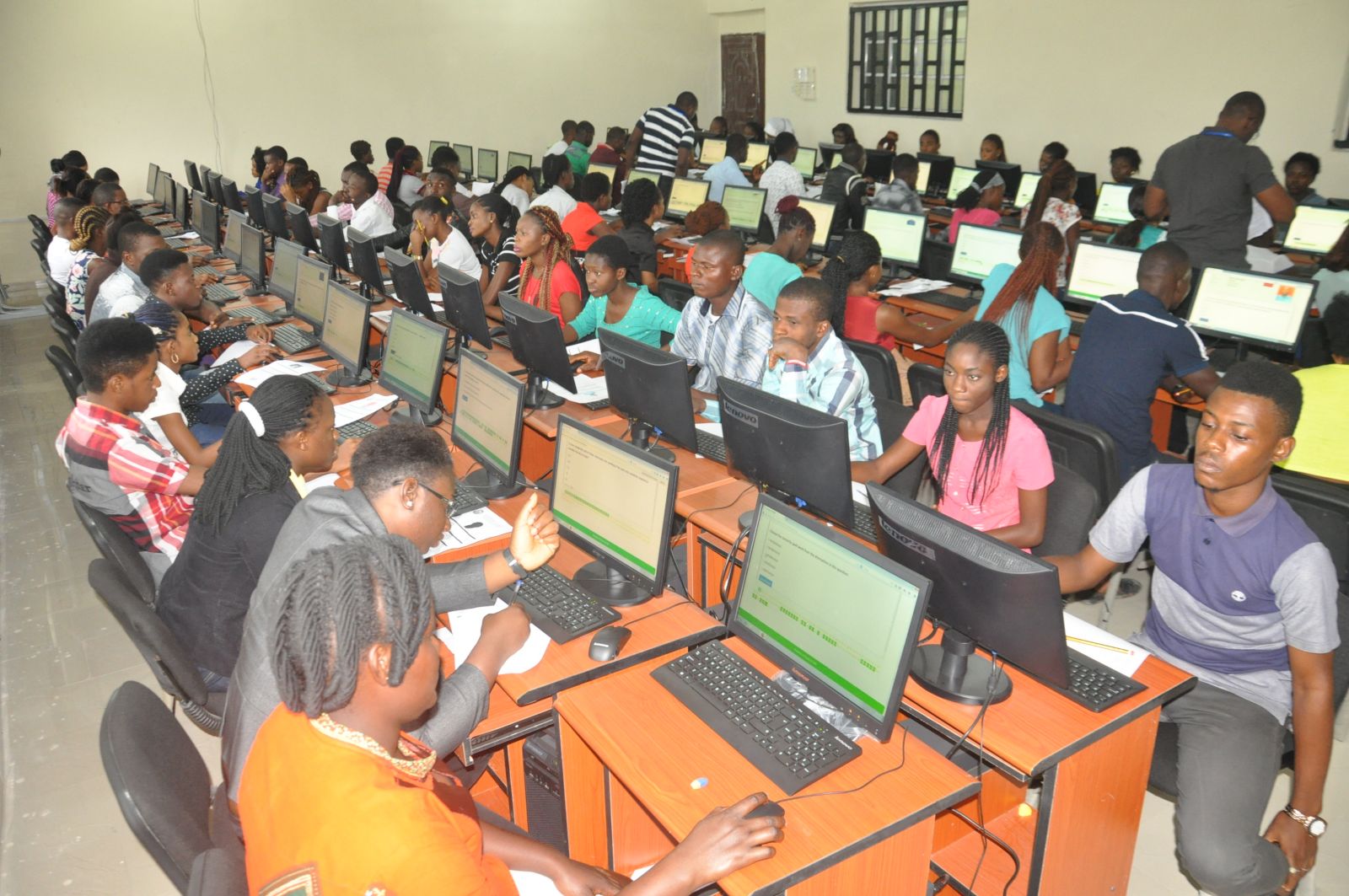
The initiative nevertheless cautioned that the available figures do not tell the entire story. It called for additional information on candidates’ score distributions and access to computer-based testing facilities to provide a more granular picture of the barriers confronting prospective students.
It also recommended that JAMB carefully pilot and independently evaluate its Bring Your Own Device (BYOD) option before considering wider implementation. The proposed assessment, according to the group, should examine cybersecurity, device standards and equity, with safeguards to ensure that candidates who do not possess suitable personal devices are not placed at a disadvantage.
The think tank also advocated broader access to CBT facilities across Nigeria’s six geopolitical zones, alongside a free preparation module that candidates can access without the completion of such training becoming a prerequisite for registration.
The recommendations arrive at a consequential juncture for JAMB. Prof. Segun Aina, a professor of Computer Engineering, assumed the registrarship at the end of July 2026 following the completion of Prof. Is-haq Oloyede’s statutory tenure. The iRead To Live Initiative believes the transition presents an opportunity for the examination body to deepen reforms while making admissions and performance information more transparent.
JAMB registered 2,243,816 candidates for the 2026 UTME, although the 2026 admission cycle was still ongoing when the policy brief was released. The think tank maintains that the 2025 statistics already provide enough evidence to warrant a closer examination of why approved admission spaces remain vacant while many prospective students continue to struggle for access.
Ultimately, the debate surrounding the 2027 UTME may extend beyond examination scores and cut-off marks. At stake is a broader question: whether Nigeria can build an admissions system in which available opportunities, institutional capacity and students’ aspirations are better aligned—and where reliable data makes the contours of that system visible to the public.
1 Comment
Admission Seekers Raise Alarm Over Rising Cost of Uploading Results on JAMB Portal – Teen Trust News
[…] them, candidates may have to deal with several costs, including registration, result uploads, post UTME screening, transportation, printing of documents and other admission related […]
Leave a Comment