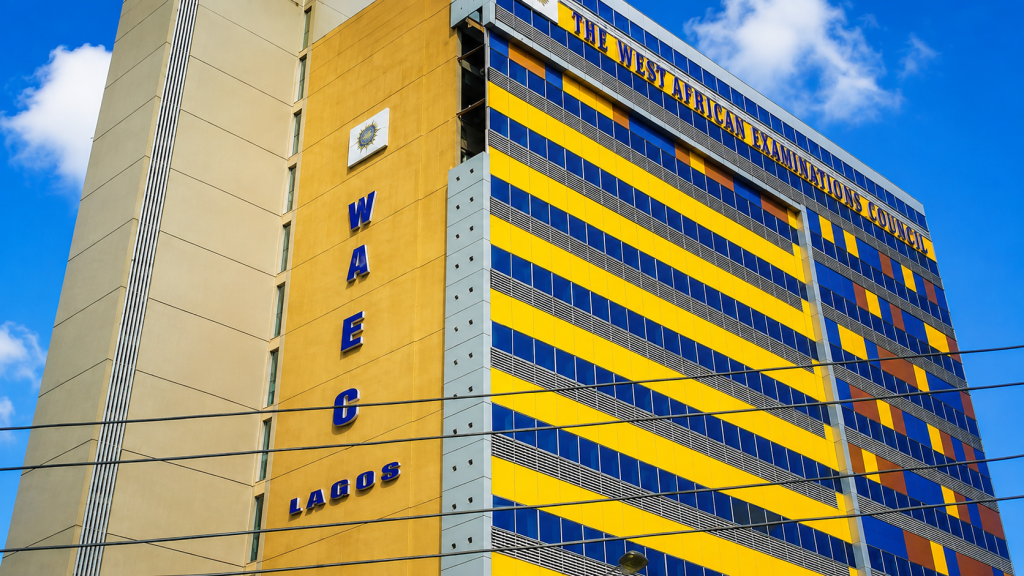
An education advocacy organisation has issued a 14-day ultimatum to the West African Examinations Council (WAEC), demanding clarification and independent scrutiny of concerns surrounding the 2026 computer-based West African Senior School Certificate Examination (CB-WASSCE).
Also read: Racism
The Initiative for School Excellence and Education Foundation, through its legal representatives, warned that failure by WAEC to respond appropriately within the stipulated period could culminate in litigation. The group’s demands centre on the preservation of examination records, candidate access to relevant electronic data and an independent assessment of the systems used to conduct and process the examination.
The legal notice, dated 14 August 2026, was signed by Chinwe Onubogu, Principal Partner of Zuriel Law Practice, and addressed to the Head of WAEC’s Nigeria National Office in Lagos.
Alex Onyia, who identifies as the Chief Executive Officer of EDU Care on X, shared the correspondence online after previously voicing concerns about the examination results. According to the notice, the group wants WAEC to preserve electronic and documentary records associated with the examination, including candidate responses, examination-session data, system audit trails, server and application logs, scoring information and records relating to technical disruptions.
The foundation also wants candidates who have raised complaints to be allowed access to relevant electronic examination records, including their recorded responses, scores and information explaining how their final grades were determined. It further requested records of any manual corrections, adjustments or reprocessing that may have influenced individual results.
At the heart of the dispute is the organisation’s call for an independent verification exercise involving specialists in educational assessment and information technology. The proposed review would examine whether WAEC’s computer-based examination platform and result-processing infrastructure functioned accurately and consistently.
The group stressed that such an exercise would not be intended to supplant WAEC’s academic judgment. Rather, it would seek to establish whether the technological and administrative mechanisms underpinning the results operated reliably and without systemic irregularities.
The development came shortly after WAEC defended the credibility of the 2026 WASSCE results amid criticism circulating on social media. The examination council maintained that the results were produced through established marking, moderation and auditing procedures and cautioned the public against relying on unverified allegations.
WAEC released the 2026 WASSCE results on 5 August, following the announcement by its Head of National Office, Amos Dangut, at a press briefing in Lagos. The examination was conducted from 24 April to 19 June.
According to figures released by WAEC, 1,959,668 candidates from 24,207 schools registered for the examination, while 1,950,726 candidates eventually sat for it. Of those who participated, 1,834,695 candidates, representing 94.05 per cent, had their results fully processed and released.
The council said the results of another 116,031 candidates, representing 5.95 per cent, were still undergoing processing when the results were announced.
Meanwhile, 1,687,378 candidates, equivalent to 86.50 per cent of those who sat the examination, secured credits in at least five subjects regardless of their performance in English Language and Mathematics. When both English Language and Mathematics were included, 1,200,514 candidates, representing 61.54 per cent, attained credits in at least five subjects.
WAEC also withheld the results of 167,486 candidates, or 8.59 per cent, over alleged examination malpractice.
With the 14-day window now hanging over the examination body, attention is likely to remain fixed on WAEC’s response and whether the controversy surrounding the 2026 WASSCE results will be resolved through administrative clarification or advance into the courtroom.
Leave a Comment