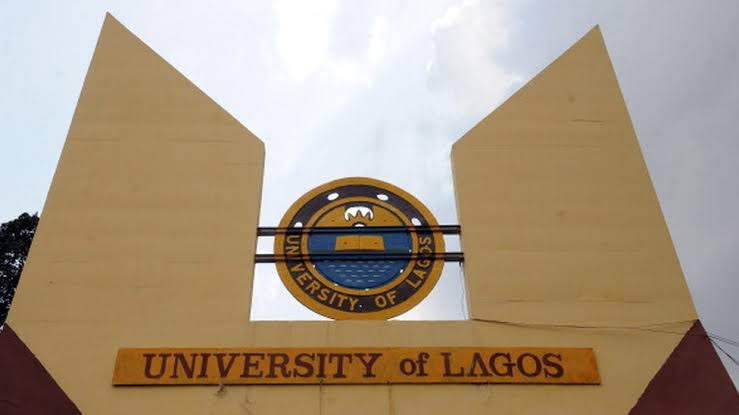
Admission season at the University of Lagos has a new headline number, and it belongs to the Faculty of Computing and Informatics. UNILAG’s newly released 2026/2027 UTME merit cutoff marks, published by university management on 16 September 2026, show Computer Science demanding a formidable 82.05, ranking it among the most competitive single programmes at the university outside the ten listed engineering courses.

Also read: Education without sports is incomplete, says Soludo
In the Faculty of Engineering itself, Computer Engineering edged even higher, posting a merit cutoff of 82.175, the highest of all ten engineering programmes listed for the session. As always, UNILAG paired its national merit scores with catchment scores, a system of slightly reduced thresholds reserved for candidates from six neighbouring states: Lagos, Ogun, Ekiti, Ondo, Osun and Oyo.
For Computer Science, the catchment figures were: Ekiti 78.4, education-support/">Lagos 73.225, Ogun 79.175, Ondo 79.675, Osun 78.85 and Oyo 79.875, figures that still sit well above what many candidates in other faculties would need for outright merit admission.
The full spread of engineering cutoffs paints a detailed picture of where competition is fiercest and where realistic entry points remain:
Biomedical Engineering carries a merit cutoff of 77.05, with catchment scores of Ekiti 75.2, Lagos 70.2, Ogun 76.175, Ondo 74.775 and Osun 66.05, but notably no catchment allowance at all for Oyo State candidates, a reminder that not every state benefits equally from the catchment system in every department.
Chemical Engineering sits at a merit cutoff of 72.925, with catchment scores of Ekiti 62.625, Lagos 63.525, Ogun 70.925, Ondo 67.525, Osun 64.675 and Oyo 62.75.
Civil Engineering requires 74.35 on merit, with catchment figures of Ekiti 62.675, Lagos 69.7, Ogun 71.9, Ondo 67.775, Osun 71.55 and Oyo 68.575.
Computer Engineering, the faculty’s top performer, requires 82.175 on merit, with catchment scores of Ekiti 80.225, Lagos 77.35, Ogun 78.8, Ondo 75.25, Osun 80.875 and Oyo 74.3.
Electrical Engineering sits at 79.025 on merit, with catchment figures of Ekiti 67.925, Lagos 74.625, Ogun 73.975, Ondo 67.7, Osun 69.2 and Oyo 71.3.
Mechanical Engineering requires 79.275 on merit, with catchment scores of Ekiti 67.625, Lagos 76.35, Ogun 77.05, Ondo 68.8, Osun 70.525 and Oyo 74.325.
Metallurgical and Materials Engineering posted the faculty’s lowest merit cutoff at 67.025, with catchment figures of Ekiti 64.875, Lagos 60.825, Ogun 65.45, Ondo 60.3, Osun 59.375 and Oyo 60.95, offering a realistic entry point for candidates whose UTME scores fell short of the more competitive programmes.
Petroleum and Gas Engineering sits at 75.025 on merit, with catchment scores of Ekiti 64.15, Lagos 66.125, Ogun 71.675, Ondo 63.75, Osun 68.275 and Oyo 69.425.
Surveying and Geomatics Engineering requires 66.075 on merit, the second lowest in the faculty, with catchment figures of Ekiti 58.075, Lagos 62.5, Ogun 64.35, Ondo 58.875, Osun 59.75 and Oyo 64.3.
Systems Engineering rounds out the list at 78.8 on merit, with catchment scores of Ekiti 73.275, Lagos 72.975, Ogun 77.925, Ondo 74.3, Osun 73.95 and Oyo 72.525.
Taken together, the gap between the faculty’s highest and lowest merit cutoffs, Computer Engineering’s 82.175 against Metallurgical and Materials Engineering’s 67.025, spans more than fifteen points, illustrating just how differently the market values different engineering specialisations among this year’s UTME candidates.
The full list of cutoff marks across all faculties has also been made available on UNILAG’s official website, alongside related releases covering Theatre Arts, Nursing Science and other programmes published earlier in the same admissions cycle.
For a generation of Nigerian teenagers raised on smartphones and now dreaming in code, the message from UNILAG’s Faculty of Computing and Informatics is unambiguous. Competition for a seat in Computer Science or Computer Engineering has never been fiercer.
Leave a Comment