By Hamza Muhammad Gana
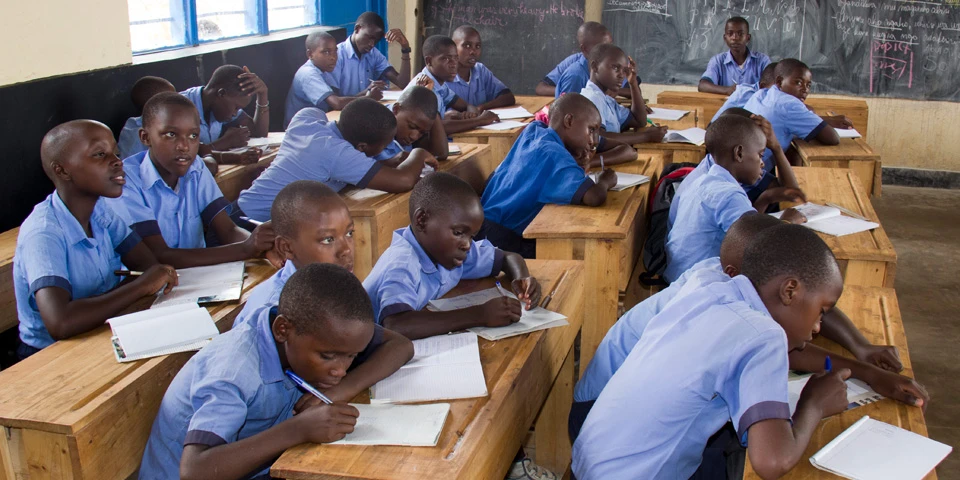
There is a girl somewhere in Nigeria whose dreams are bigger than the circumstances surrounding her. She wants to become a doctor, a journalist, an engineer, a scientist, a pilot, or perhaps the first woman to occupy a position that history has long reserved for men. Yet, somewhere between her dreams and reality stands a barrier: the denial of education.
Also read: Nigerian Medical Students Lead Hepatitis Awareness Campaign

For millions of Nigerian girls, the classroom is not simply a place to learn; it is a doorway to freedom, dignity, confidence, and a future they have every right to determine. Unfortunately, that doorway remains inaccessible to many.
According to UNICEF, Nigeria has one of the world’s largest populations of out-of-school children. A 2026 report by the agency indicates that nearly three-quarters of Nigerian girls lack foundational literacy and numeracy skills, while one in four remains out of school. These figures represent more than statistics; they represent millions of interrupted childhoods, abandoned ambitions and unrealised possibilities.
The situation is particularly concerning in parts of Northern Nigeria, where poverty, insecurity, early marriage, cultural misconceptions and gender discrimination continue to undermine girls’ access to education. Some families prioritise boys’ schooling, believing that educating a girl offers limited returns because she will eventually marry and join another household.
This perception is fundamentally misplaced.
An educated girl does not become less committed to her family or culture. Rather, she becomes better equipped to contribute meaningfully to both. Education gives her the ability to make informed decisions, understand her rights, participate in society, and challenge practices that perpetuate inequality.
Beyond literacy: The psychological importance of educating girls
The impact of education extends beyond reading, writing and obtaining certificates. It shapes a girl’s psychological development, self-esteem, independence and perception of her own worth.
When a girl is encouraged to learn, ask questions, express opinions and pursue her ambitions, she gradually develops confidence in her abilities. She begins to see herself not as someone whose future must be decided by others, but as an individual capable of making meaningful choices.
Similarly, denying a girl education can reinforce feelings of helplessness, dependency and exclusion, limiting her confidence and participation in decisions affecting her life.
Education also equips girls with knowledge to recognise exploitation, understand personal boundaries, seek help and protect themselves against abuse, discrimination and harmful practices.
This is why educating the girl child should not be treated as charity. It is a fundamental human right and a necessary investment in national development.
Women who demonstrate what is possible
Nigeria has produced women whose achievements demonstrate the extraordinary possibilities that emerge when girls receive opportunities to learn and excel.
Dr Ngozi Okonjo-Iweala, Nigeria’s former Finance Minister, is the first woman and first African to serve as Director-General of the World Trade Organization. Her journey demonstrates that Nigerian women can occupy the highest levels of global economic leadership.
Amina J. Mohammed, Deputy Secretary-General of the United Nations, represents Nigeria in global conversations on sustainable development, equality and international cooperation.
Beyond these remarkable women, Nigeria’s young Flamingos have offered another powerful example. On November 7, 2026, the U-17 women’s national team defeated Japan 2–1 to become the first African nation to win the FIFA U-17 Women’s World Cup.
These women and girls represent different fields, generations, and ambitions, but their stories communicate one important message: opportunity can transform potential into achievement.
The responsibility belongs to everyone
Government must strengthen policies that guarantee free, accessible, and quality education, particularly in underserved communities. Scholarships, safe schools, trained female teachers, adequate sanitation facilities and protection against gender-based violence must become priorities rather than promises.
Parents and traditional and religious leaders must also challenge harmful perceptions that prevent girls from attending school. Communities should recognise that educating daughters strengthens families, reduces poverty and contributes to healthier societies.
Girls who have dropped out because of marriage, pregnancy, or economic difficulties must also be given opportunities to return through flexible learning programmes and vocational education.
Ultimately, we must stop asking whether girls deserve education and start asking why society continues to deny them this fundamental right.
The future we want begins with the girl we educate today.
Every girl deserves the opportunity to read, think, question, innovate, lead, and dream without limitations. She deserves a classroom instead of forced silence, encouragement instead of discrimination, and opportunities instead of predetermined limitations.
When we educate a girl, we do not merely prepare her for employment; we empower a mother, strengthen a community, develop a nation, and potentially shape a global leader.
Let us not wait until another Nigerian woman makes international headlines before recognising the potential of the millions of girls sitting outside our classrooms.
The next Ngozi Okonjo-Iweala, Amina Mohammed, may be among them.
She does not need society to lower its expectations of her. She needs society to stop limiting her opportunities.
EDUCATE THE GIRL CHILD, EMPOWER THE NATION.
Leave a Comment