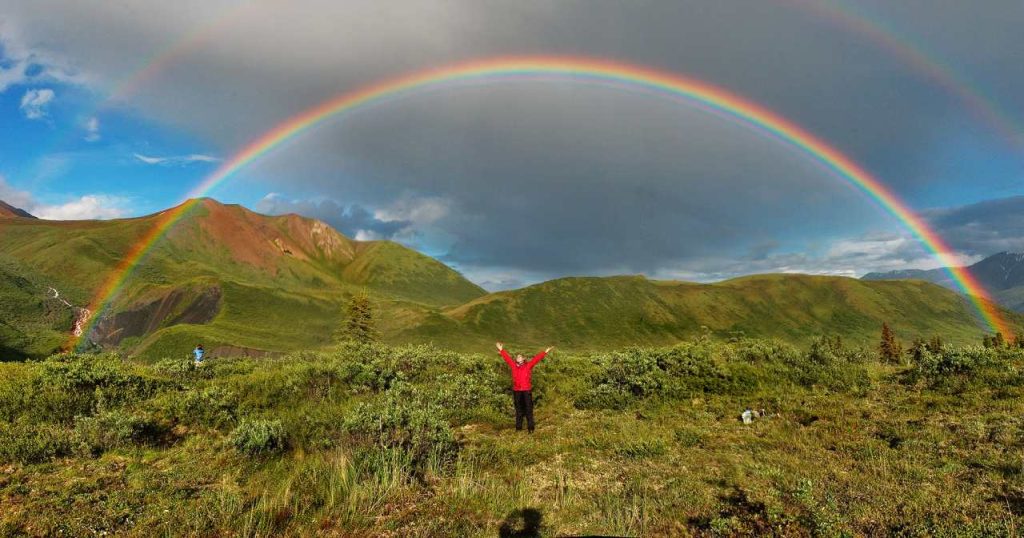
Rainbows are one of nature’s most beautiful sights. After a rainy day, you may look up at the sky and see a huge arc filled with colors. It looks almost like someone painted the sky.
But there is no giant paintbrush hiding in the clouds. A rainbow is created when **sunlight and water droplets work together**. So, what exactly happens?
Also read: Your feelings, your pages; a creative guide to journaling
Sunlight is more than one colour
When you look at sunlight, it may appear white. But sunlight is actually made up of many different colors. These colors include **red, orange, yellow, green, blue, indigo, and violet**. We normally see them mixed as white light. A rainbow happens when these colors separate. This process begins when sunlight enters a tiny water droplet.
What happens inside the raindrop?
When sunlight enters a raindrop, the light slows down and bends. This bending of light is called **refraction**. Different colors of light bend by slightly different amounts. The light then reaches the back of the water droplet and is reflected. It travels back towards the front of the droplet and bends again as it comes out. All of this happens very quickly. The result is a spread of colors that we can see as a rainbow.
Why does a rainbow appear after rain?
After rainfall, there are often lots of tiny water droplets floating in the air. If the sun comes out while these droplets are still in the sky, the sunlight can pass through them. This is why rainbows are often seen when the sun is shining while rain is falling or just after it has rained. There is one important detail: the sun needs to be behind you for you to see a rainbow in front of you. That is why you may see a rainbow when the rain is ahead of you and sunlight is coming from behind.
Why are there different colours?
The colors in a rainbow do not all bend in the same way. Red light bends the least, while violet bends the most. This causes the different colors to spread out instead of staying mixed together. That is why we see the familiar rainbow pattern.
A simple way to remember the order is red, orange, yellow, green, blue, indigo, and violet.**
Can you touch a rainbow?
Unfortunately, no! A rainbow is not a solid object sitting in one place. It is an optical effect created by light, water, and the position of the person watching it. This means two people standing in different places may not see the same rainbow. You also cannot walk towards a rainbow and reach its end. As you move, the rainbow appears to move too.
Can rainbows appear anywhere else?
Rainbows are not limited to the sky. You can sometimes see rainbow colors around waterfalls, fountains, or sprinklers when sunlight hits the water at the right angle. You can even make a tiny rainbow at home using a glass of water and sunlight, but ask an adult to help you choose a safe spot and handle the glass. You may also notice colorful patterns when sunlight passes through a glass prism. A prism can separate white light into its different colors, much like raindrops do.
A colourful science lesson
Rainbows may look like magic, but they are a wonderful example of science at work. They show us that light can bend, reflect, and separate into different colors. So the next time you see a rainbow after rainfall, take a moment to look closely. Behind those beautiful colors is a fascinating little science experiment happening in millions of tiny water droplets. Nature really does know how to put on a show!
Leave a Comment