Thirteen is a genuine turning point for readers. Kids at this age are typically ready to move beyond simple, straightforward tales and start engaging with stories that carry real tension, moral complexity, and a twist ending that actually surprises them. Short stories are an especially good fit for this stage, since they deliver a complete, satisfying experience without requiring the sustained commitment of a full novel.
Also read: The hidden cost of examination stress
For 13 year olds specifically, short stories offer something a little different from books aimed at younger kids or older teens: enough craft and depth to feel genuinely engaging, without overwhelming length or overly mature content. They’re also a favorite tool among teachers, since a strong short story can be read, discussed, and analyzed within a single class period, making them a staple of middle school English curricula.
This guide covers why short stories work so well for this age group, what to look for when choosing one, a list of stories widely recommended for 13 year olds with an explanation of what makes each one work, and answers to frequently asked questions about building a reading list.
Why Short Stories Work So Well for 13 Year Olds
A few qualities make short stories a particularly good fit at this age:
- They offer a complete narrative arc, beginning, middle, twist, and resolution, in a single sitting, which suits both reluctant readers and those with limited free time.
- Many classic short stories were specifically built around a memorable twist ending, which tends to be especially engaging for readers just starting to appreciate more sophisticated plotting.
- They introduce literary techniques like foreshadowing, unreliable narration, and symbolism in a more digestible format than a full novel.
- Short story collections make it easy to sample many different authors, genres, and styles without committing to an entire book.
What to Look for When Choosing Stories for This Age
Not every short story marketed as “classic” or “popular” is automatically a great fit for a 13 year old. A few things are worth considering:
- Age appropriate content. Some frequently assigned classic stories include intense themes (death, violence, moral ambiguity) that are well suited to this age but still worth previewing if a particular reader is sensitive to darker material.
- Reading level versus interest level. A story that’s technically readable but emotionally flat won’t hold a 13 year old’s attention; look for stories with genuine narrative tension.
- A satisfying structure. Stories with a clear build and payoff, especially twist endings, tend to leave a stronger impression than more meandering, plotless pieces at this age.
- Variety. Mixing genres, horror, mystery, science fiction, realistic fiction, keeps a reading list from feeling repetitive and helps a young reader discover what they actually enjoy.
10 Short Stories Widely Recommended for 13 Year Olds

Short stories are a great way for 13 year olds to explore different ideas, emotions, cultures and experiences without having to read a lengthy novel. From thrilling adventures and mysterious events to emotional family stories and imaginative science fiction, classic short stories offer something for almost every type of reader. They can also introduce young readers to important literary techniques such as suspense, irony, symbolism, characterization and unexpected twists.
Whether you enjoy horror, drama, romance, survival or science fiction, the following classic short stories provide engaging plots while offering valuable lessons and themes that can encourage teenagers to think more deeply about people and the world around them
1. “The Most Dangerous Game” by Richard Connell
“The Most Dangerous Game” is a tense survival story about Sanger Rainsford, a skilled big game hunter who finds himself stranded on a mysterious island. There, he meets General Zaroff, a wealthy man who has become bored with hunting animals and has started hunting humans instead.
Rainsford is forced to become the target of Zaroff’s deadly game and must use his intelligence and survival skills to escape. The story becomes increasingly suspenseful as Rainsford tries to stay one step ahead of his opponent.
For teenage readers, the story is particularly engaging because of its fast moving plot, danger and unexpected twists. It also encourages readers to think about the morality of hunting for entertainment and how a person’s attitude can change when they experience the same danger they once imposed on others.
2. “The Masque of the Red Death” by Edgar Allan Poe
“The Masque of the Red Death” is a dark gothic story about Prince Prospero, a wealthy ruler who believes he can protect himself and his friends from a deadly plague by hiding inside a heavily secured castle. While people outside are suffering from the disease, Prospero and his guests hold a lavish masquerade party, believing they are safe from the world beyond their walls.
The appearance of a mysterious masked figure eventually destroys their sense of security and reminds them that wealth and power cannot protect people from death. Poe creates a mysterious and frightening atmosphere through his descriptions of the castle, the strange rooms and the unusual masked figure.
Teenagers can also explore the story’s ideas about privilege, fear, isolation and the human desire to escape problems rather than confront them.
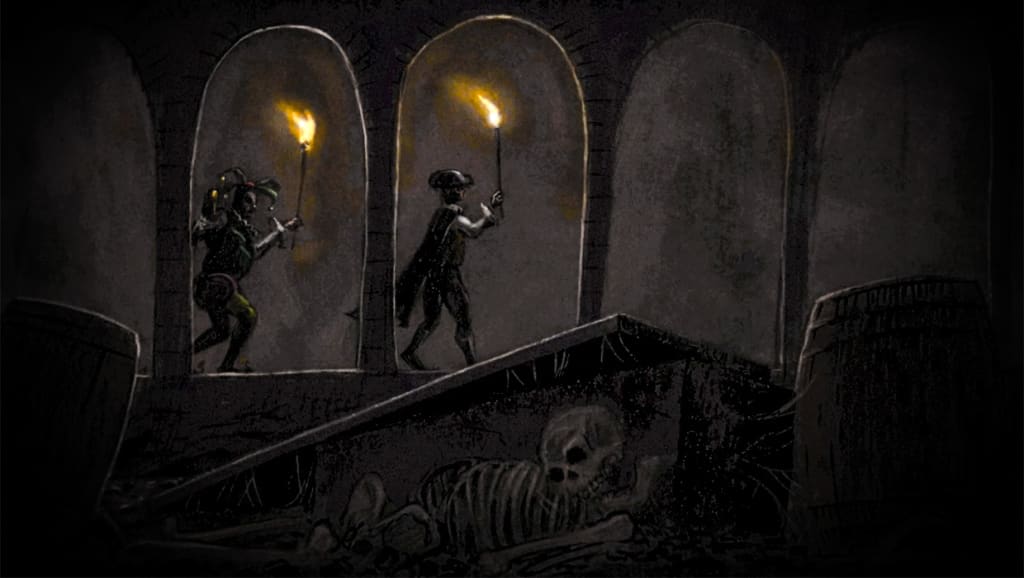
3. “The Cask of Amontillado” by Edgar Allan Poe
“The Cask of Amontillado” tells the story of Montresor, a man who claims that Fortunato has insulted him and decides to take revenge. During a carnival, Montresor tricks Fortunato into following him into underground catacombs by claiming that he has access to a rare wine called Amontillado.
As they travel deeper into the dark tunnels, readers gradually realize that Montresor’s intentions are far more sinister than he admits. The story is especially effective because Montresor tells the story himself, forcing readers to question whether his explanation of the conflict can be trusted.
Its themes of revenge, pride, deception and manipulation make it useful for teenagers learning how authors create suspense and develop unreliable narrators.
4. “The Gift of the Magi” by O. Henry
“The Gift of the Magi” follows Jim and Della, a young married couple who love each other deeply but have very little money. As Christmas approaches, each person secretly decides to sacrifice their most valuable possession to purchase a special gift for the other.
Della sells her beautiful hair to buy Jim a gift, while Jim sells his valuable possession to purchase something for Della. When they exchange their presents, they discover that the sacrifices they made have temporarily made the gifts useless. Although the ending is humorous and bittersweet, the story emphasizes that genuine love is not measured by the price of a gift.
Teenagers can relate to the pressure of finding the perfect gift for someone they care about while also learning that thoughtfulness and sacrifice can be more meaningful than material possessions.
5. “The Scarlet Ibis” by James Hurst
“The Scarlet Ibis” focuses on the complicated relationship between two brothers, Doodle and his older brother, who narrates the story. Doodle has physical limitations, and his older brother becomes determined to teach him to walk and perform activities that other children can do.
Although his brother appears to be helping him, his motivation is partly influenced by embarrassment and pride. He wants Doodle to become stronger because he does not want to be ashamed of having a brother who is different from other children.
The pressure he places on Doodle eventually has tragic consequences. The story is particularly powerful because it shows how love and selfishness can exist at the same time. It encourages teenage readers to think about acceptance, family relationships, personal expectations, guilt and the importance of allowing people to develop at their own pace.
6. “Lamb to the Slaughter” by Roald Dahl
“Lamb to the Slaughter” is a darkly humorous story about Mary Maloney, a woman whose seemingly ordinary life changes after her husband gives her unexpected news. Following the shocking event that occurs afterward, Mary quickly realizes that she must think carefully about what she does next.
She attempts to make the situation appear ordinary while investigators later search for evidence. The story’s humor comes partly from the contrast between the serious investigation and the ordinary domestic setting.
Dahl uses irony to create an ending that is both surprising and darkly amusing. Teenagers may find the story especially engaging because it is short, fast paced and filled with suspense, while also showing how appearances can be misleading.
7. “The Monkey’s Paw” by W. W. Jacobs
“The Monkey’s Paw” is a classic supernatural story about a family that receives a mysterious monkey’s paw that is said to grant three wishes. Although they are warned that the object can bring terrible consequences, curiosity and temptation encourage the family to make a wish.
What initially seems like an opportunity for good fortune soon becomes a source of fear and regret. Each event makes the family increasingly aware that getting exactly what you wish for does not necessarily mean getting what you actually want. The story is memorable because it builds suspense slowly before creating an unsettling conclusion.
For teenagers, it offers an interesting way to explore themes such as temptation, greed, fate and the consequences of making decisions without considering what might happen afterward.
8. “To Build a Fire” by Jack London
“To Build a Fire” is a survival story about a man traveling alone through the extremely cold Yukon wilderness. Despite warnings about the dangers of the environment, he believes that his knowledge and confidence are enough to keep him safe.
As the journey continues, the harsh conditions become increasingly difficult to manage, and the man’s decisions begin to have serious consequences. The story focuses strongly on the relationship between humans and nature, showing that confidence does not always equal preparedness.
Teenagers who enjoy adventure and survival stories may find the story particularly interesting because the tension comes from the character’s struggle against an unforgiving environment. It also teaches the importance of preparation, humility and understanding the limits of human control.
9. “The Veldt” by Ray Bradbury
“The Veldt” is a science fiction story set in a futuristic home where technology performs almost every household task for a family. The children are particularly attached to a virtual nursery that can create incredibly realistic environments based on their thoughts.
Their parents become concerned when the children spend more time in the virtual world and begin to resist their parents’ attempts to control their use of the technology. As the story develops, the relationship between the family members becomes increasingly disturbing.
Bradbury uses the futuristic setting to examine issues that still exist today, including technology dependence, excessive screen time, parenting and family conflict. Teenage readers may find the story especially relatable because it raises questions about how much control technology should have over people’s everyday lives.
10. “The Necklace” by Guy de Maupassant
“The Necklace” follows Mathilde Loisel, a woman who dreams of wealth, luxury and a higher social position. When she receives an invitation to an important social event, she worries that she does not have enough money or expensive possessions to fit in.
She borrows what appears to be a valuable necklace from a friend and wears it to the event, enjoying the attention she receives. However, after returning home, she discovers that the necklace is missing. She and her husband spend years working and making sacrifices to replace it, only to eventually discover an unexpected truth about the original necklace.
The story is a powerful example of irony and shows how the desire to impress others can lead to serious consequences. It also encourages teenagers to think about social pressure, appearances, materialism, honesty and the difference between how people appear and what their lives are actually like.
Short Story Collections Worth Exploring
Beyond individual classic stories, a few collections are frequently recommended specifically for readers around age 13:
- Tales from Outer Suburbia by Shaun Tan. A collection of thought-provoking, illustrated short stories exploring how ordinary people react to strange and unusual situations, blending different artistic styles with imaginative storytelling.
- Here I Stand, various authors, illustrated by Chris Riddell. A collection of short stories from acclaimed authors that use fiction to put real political and social issues into context for younger readers.
- The Complete Works of Saki. A collection of sharp, often darkly funny short stories, including favorites like “The Open Window” and “The Storyteller,” well suited to readers who enjoy wit alongside a strong narrative twist.
How to Build a Reading List for a 13 Year Old
- Start with a strong hook. Picking a story with an immediately engaging opening tends to build momentum for tackling more challenging pieces afterward.
- Mix genres deliberately. Alternating between horror, mystery, science fiction, and realistic fiction helps identify what a particular reader actually connects with.
- Discuss the twist. For stories built around a surprise ending, talking through what clues were planted earlier in the story can deepen appreciation for the craft involved.
- Let them reread favorites. Rereading a story that clicked the first time often reveals new details and can build genuine enthusiasm for the format.
Common Myths About Short Stories for This Age
Myth: Short stories are too simple for a 13 year old. Many classic short stories deal with genuinely complex themes, morality, mortality, deception, packed into a much shorter format than a novel, which can make them more, not less, demanding to fully appreciate.
Myth: Classic short stories are too old-fashioned to engage modern readers. Stories like “The Veldt” and “The Lottery” remain widely assigned precisely because their themes, technology, conformity, and hidden danger, still resonate strongly today.
Myth: Short stories aren’t as valuable as novels for building reading skills. Short stories teach many of the same core skills, plot structure, character development, thematic analysis, in a format that’s often more approachable for developing or reluctant readers.
Frequently Asked Questions
What Reading Level Are These Stories Generally Appropriate for?
Most of the stories on this list are commonly taught in grades 7 through 9, making them a solid fit for the typical reading level of a 13 year old, though individual reading ability varies.
Are These Stories Appropriate for Sensitive Readers?
Several, particularly the Poe and horror leaning selections, involve death or unsettling themes; it’s worth previewing a story first if a particular reader tends to be sensitive to darker content.
What’s a Good Starting Point for a Reluctant 13 Year Old Reader?
Fast paced, high tension stories like “The Most Dangerous Game” or “Lamb to the Slaughter” tend to hook reluctant readers quickly, since the stakes and momentum are clear from the opening pages.
Why Are Twist Endings So Common in Stories for This Age Group?
A well executed twist rewards close reading and active engagement, which tends to be especially satisfying for readers who are just beginning to notice and appreciate more sophisticated storytelling techniques.
Where Can 13 Year Olds Find These Stories for Free?
Many classic short stories, since they’re in the public domain, are available for free through sites that host public domain literature, as well as through most public library systems and school reading platforms.
1 Comment
30 Top Movies With Teenage Love Stories: A Must Read For Teenager – Teen Trust News
[…] This list starts with several essential teen romance movies, including the recommendations provided above. It then expands into more memorable titles from major teen movie collections. […]
Leave a Comment