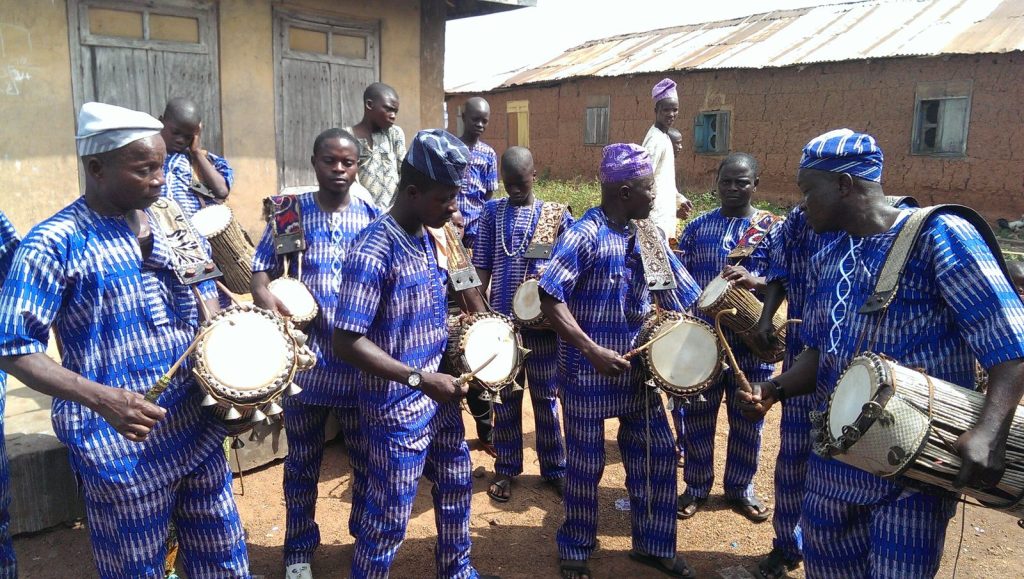
In the Yoruba culture of Nigeria, music is not just for dancing. Sometimes, music can actually “talk”. This is done using a special instrument called the talking drum, also known as the Dundun.
The talking drum is shaped like an hourglass. It is made with wood and covered with animal skin on both sides. It has strings along the sides, and the drummer squeezes these strings while playing. This makes the drum change its sound.
Also read: The Itsekiri Kompini dance
Because of this special design, the drum can imitate the tone of human speech. In the Yoruba language, words have tones, and meaning can change depending on how a word is said. The talking drum copies these tones, so people who understand the language can “hear” messages from it.
This means the drum can send greetings, praise, warnings, or even jokes!
Long ago, talking drums were very important in Yoruba towns and villages. They were used to communicate from far away. If there was an important message, a skilled drummer could send it across the village using rhythms and tones. People listening would understand what was being said.
Talking drums were also used during celebrations. At weddings, festivals, and royal events, drummers would play to praise kings, chiefs, and important guests. The drummer would often “sing” a person’s praise using the drum.
This is why drummers are highly respected in Yoruba culture. A good drummer must not only be skilled in playing the instrument but also understand language, history, and tradition. Many drummers learn their skills from older family members, passing the knowledge from one generation to another.
Today, talking drums are still very important. They are used in churches, concerts, and cultural events. Modern musicians also use them in Afrobeat and other music styles, blending tradition with new sounds.
Famous Nigerian musicians like King Sunny Ade and other traditional performers have helped bring the talking drum to the world stage. When people hear it, they immediately feel its energy and rhythm.
The talking drum is more than just an instrument. It is a voice of culture, history, and identity. It shows how creative the Yoruba people are and how music can carry meaning beyond words.
In conclusion, the Yoruba talking drum is a special drum that can “speak” through sound. It connects people, tells stories, and keeps culture alive. Even today, it continues to remind us that music is a powerful language of its own.
Leave a Comment