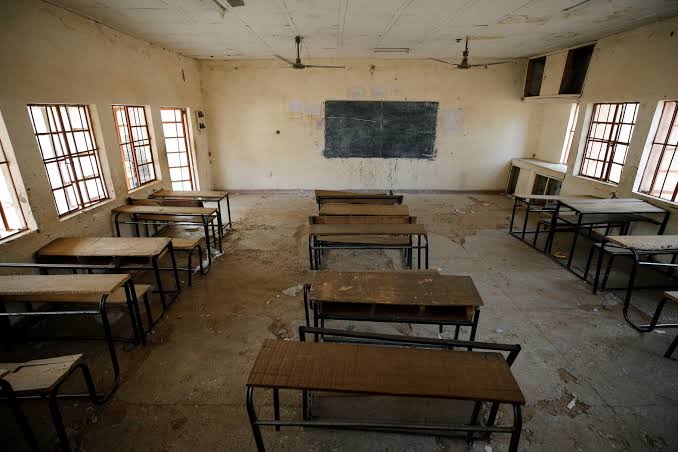
Nigeria’s education crisis is taking another dangerous turn as insecurity continues to force schools to close, leaving thousands of children without regular access to classrooms.

Also read: My idol, Stephen Curry
What was once largely associated with the insurgency in the North-East has increasingly become a national concern, with kidnapping and other forms of criminal violence threatening schools and communities in different parts of the country.
The scale of the problem is already alarming. Reports cited in a recent Vanguard analysis indicate that at least 188 public schools have been shut because of insecurity across Benue, Katsina, Zamfara, Niger, Sokoto and Kaduna states.
The figure, however, does not include Borno, Yobe and Adamawa, where years of insurgency have caused extensive disruption to education.
The danger has also spread beyond the traditional conflict zones.
In May 2026, more than 46 pupils, students and teachers were abducted from three schools in Oriire Local Government Area of Oyo State. Two people were reportedly killed during the incident, while the affected schools remained closed even after the abducted victims were rescued.
The growing attacks have created a disturbing cycle.
Parents are afraid to send their children to school. Teachers are reluctant to work in dangerous communities. Students lose valuable learning time, while communities gradually lose confidence in the ability of authorities to protect educational institutions.
The crisis has also exposed the vulnerability of Nigeria’s already fragile education system.
According to UNICEF figures cited in the report, about 20 million Nigerian children aged five to 14 are out of school, representing a significant share of the world’s out-of-school children.
Every additional school closure therefore risks pushing more children away from education.
The threat is not limited to the immediate loss of classroom time. Prolonged disruption can damage students’ academic progress, weaken their future employment prospects and deepen inequality between children living in safer communities and those in conflict-affected areas.
The situation also presents a broader national security challenge. When criminal groups can effectively determine whether schools open or close, the impact extends beyond education to the authority of the state itself.
Experts and observers have increasingly called for stronger protection of vulnerable schools, better intelligence gathering, early-warning systems and faster emergency responses.
The financial network supporting kidnapping and terrorism must also be disrupted, while those who finance or facilitate criminal operations should face prosecution.
Nigeria’s classrooms were built to be places where children learn about their future. They cannot become places parents fear to send their children.
Protecting schools, therefore, is not simply an education policy. It is a fundamental part of protecting Nigeria’s future.
1 Comment
Mind Builders School Celebrates Graduates and Calls for Character Beyond the Classroom – Teen Trust News
[…] school held its 2026 convocation and graduation ceremony as students marked the completion of an important […]
Leave a Comment