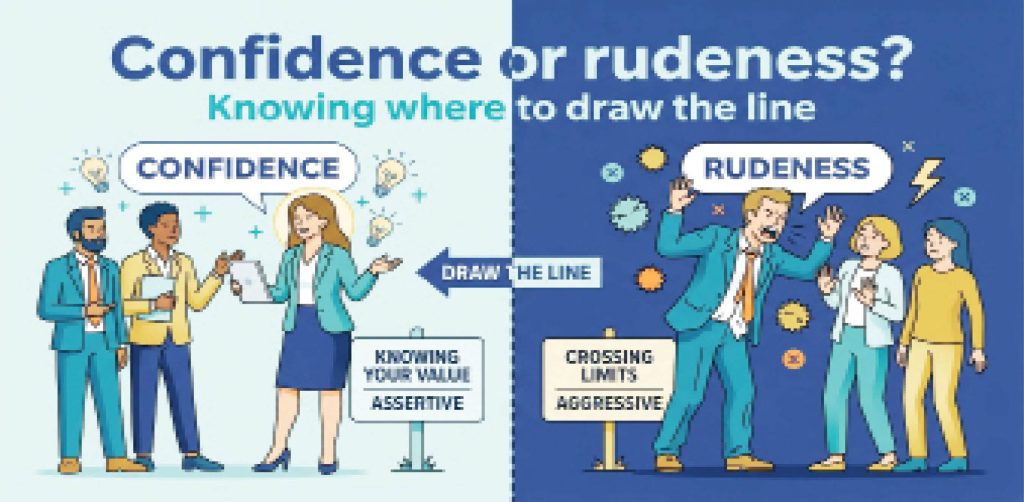
Speaking your mind, standing up for yourself and refusing to follow the crowd are signs of confidence. But interrupting people, dismissing their opinions or making others feel small is a different story. Sometimes, the line between being confident and being rude can be thinner than we think.
As teenagers grow and discover who they are, learning to express themselves is important. It is good to know your worth, defend your beliefs and set boundaries. But confidence should not come at the expense of other people’s feelings. So, how do you know when you are being bold and when you are crossing the line?
Also read: Chores list for teenagers
What does it mean to be confident?
Confidence means believing in yourself and your abilities. It means being comfortable with who you are, even when other people do not agree with you.
A confident student can raise a hand in class to answer a question without worrying too much about making a mistake. A confident teenager can say no to peer pressure, even when friends are trying to convince them to do something wrong.
Confidence also means knowing that you have a right to express your feelings, ask questions and share your opinions. You do not have to agree with everyone just to make them like you.
For example, imagine your friends want you to make fun of another student. You can confidently tell them that you do not want to be part of it. You can stand by your decision without insulting anyone or starting a fight. That is confidence in action.
When does confidence become rudeness?
Rudeness often begins when someone forgets that other people have feelings, opinions and rights, too.
Imagine a student who always insists on having the final say during group discussions. Whenever someone shares an idea, the student interrupts and says, “That is a stupid idea. Mine is better!”
The student may believe they are showing confidence, but their behaviour is disrespectful.
Being confident does not mean you are always right. It does not mean you must win every argument or prove that you are smarter than everyone else.
You can disagree with someone without embarrassing them. You can correct a mistake without making the person feel foolish. You can express your opinion without acting as though everyone else knows nothing. The difference is often in how you treat people while expressing yourself.
You can be bold without being disrespectful
Sometimes, people are afraid to speak up because they do not want to appear rude. They agree with things they dislike, keep quiet when someone crosses their boundaries or allow others to make decisions for them. But being respectful does not mean you must always say yes.
Suppose a friend asks to copy your homework. You know it is wrong, but you are afraid that refusing might upset them.
You can say, “I’m sorry, but I won’t let you copy my work. However, I can explain the questions you find difficult.”
This response is firm but respectful. You have made your position clear without insulting your friend.
Now imagine responding with, “Are you mad? Must you depend on me for everything?”
Both responses say no, but only one protects your boundary without attacking the other person.
Learning to say no politely is an important part of becoming confident.
Social media can make it confusing
Social media has made it easier for people to share their opinions, challenge others and express themselves. However, it can also make rude behaviour look fashionable.
You may have seen videos where people insult others and call it “keeping it real.” Sometimes, people praise someone for being savage simply because they said something hurtful without hesitation.
But being outspoken does not automatically make someone confident, and making people uncomfortable does not always mean you are telling the truth.
You can be honest without being cruel. You can correct someone without turning their mistake into entertainment for others.
Before posting a comment or replying to someone online, ask yourself: Am I trying to explain my point, or am I trying to embarrass this person?
Remember that there is a real human being behind the screen. A comment that makes others laugh may leave someone feeling hurt long after the laughter has ended.
What if people call you rude for standing up for yourself?
Here is where things can become tricky. Not everyone will like it when you begin expressing yourself more confidently. A friend who is used to you always agreeing with them may become upset when you start saying no. Someone who expects you to remain silent may call you disrespectful when you finally speak up.
This does not automatically mean you are rude.
Sometimes, people confuse boundaries with disrespect because they are not used to being challenged.
However, it is also important to examine your own behaviour honestly. Did you express your feelings calmly? Did you listen when the other person spoke? Did you attack their character instead of addressing what they did?
You cannot control how everyone reacts to you, but you can take responsibility for how you communicate.
If you realise that you have spoken harshly, you can apologise without abandoning your original point. Saying, “I’m sorry for the way I spoke to you, but I still disagree with what you did,” shows that you can admit your mistake while standing by your feelings. That is a valuable skill.
How can you find the balance?
The good news is that confidence and respect can exist together. You do not have to choose between being bold and being kind.
Start by listening to other people. Listening does not mean you must agree with everything they say. It simply means giving them a chance to express themselves.
Think before you speak, especially when you are angry. Words can be difficult to take back once they have been said.
Learn to accept correction, too. Nobody knows everything, and being willing to learn does not make you weak.
Finally, treat people with the same respect you expect from them. You can be proud of your achievements without looking down on others, and you can stand up for yourself without trying to bring someone else down.
You can be confident and kind
Growing up involves learning how to express yourself, defend your beliefs and build relationships with different people. You will not always get it right, and that is okay. What matters is being willing to learn. The next time you feel the need to speak up, remember that confidence is not about being the loudest person in the room or having the last word. It is about knowing your worth without making others feel worthless.
You can stand tall without stepping on anyone else.
Leave a Comment