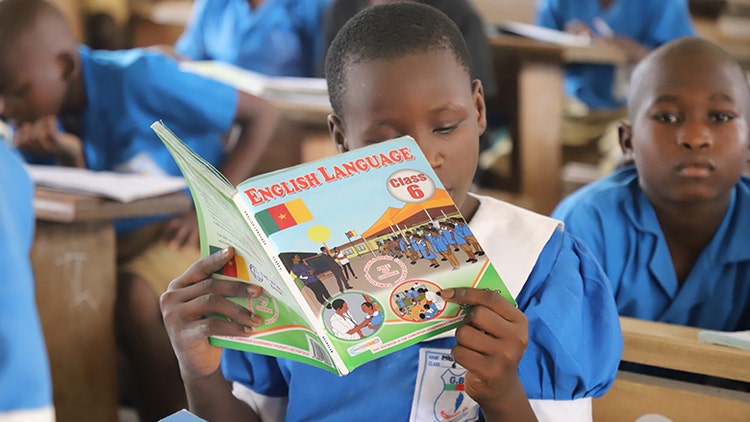
The Federal Government’s proposed policy to assess and rank textbooks has sparked fresh debate among education stakeholders, with publishers and policy experts calling for broader consultations to ensure the reform strengthens, rather than disrupts, Nigeria’s education system.

Also read: How to make money as a Snail farmer: A Teenager’s Guide
The proposed policy is aimed at improving the quality of textbooks used in schools by ensuring that learning materials align with the national curriculum and meet established educational standards. While many stakeholders have welcomed the government’s commitment to quality assurance, concerns have been raised over the implementation of the proposed ranking system.
The Nigerian Publishers Association (NPA) has cautioned that introducing a formal ranking of textbooks and publishers could produce unintended consequences, including reduced competition, lower investment in educational publishing, and limited diversity in learning materials.
According to the association, although the objective of improving textbook quality is widely supported, the proposed ranking system could inadvertently influence schools, parents, and booksellers to favour only government-ranked titles, thereby creating an uneven playing field within the publishing industry.
In response to the concerns, the Federal Ministry of Education recently engaged key stakeholders to clarify aspects of the proposed policy. The ministry explained that the ranking is primarily intended to guide government procurement decisions, while the Nigerian Educational Research and Development Council (NERDC) will continue to oversee curriculum compliance for educational materials.
The ministry also indicated that issues relating to implementation costs, stakeholder representation, and industry participation in decision-making would be reviewed as part of the ongoing consultation process.
Education stakeholders, however, stressed that consultation should continue beyond the policy design stage to ensure effective implementation. They noted that many education reforms in Nigeria have struggled to achieve their intended outcomes because of inadequate planning, insufficient teacher training, limited learning resources, and weak monitoring mechanisms.
Observers pointed to previous reforms, including the Universal Basic Education programme, curriculum reviews, and the introduction of digital learning initiatives, as examples where implementation challenges affected expected outcomes despite well-intentioned policies.
They also emphasised that successful education systems around the world place greater emphasis on teacher development, curriculum delivery, phased implementation, and continuous evaluation rather than relying solely on new policies or technological interventions.
Stakeholders further argued that reforms involving textbook quality, curriculum delivery, and student assessment should be implemented through extensive consultation, pilot programmes, and regular evaluation to minimise unintended consequences and improve long-term outcomes.
As discussions continue, education experts maintain that the current debate presents an opportunity for government, publishers, teachers, and other stakeholders to collaborate on developing a transparent and sustainable framework that improves learning materials while preserving fairness, innovation, and competition within Nigeria’s education sector.
Leave a Comment