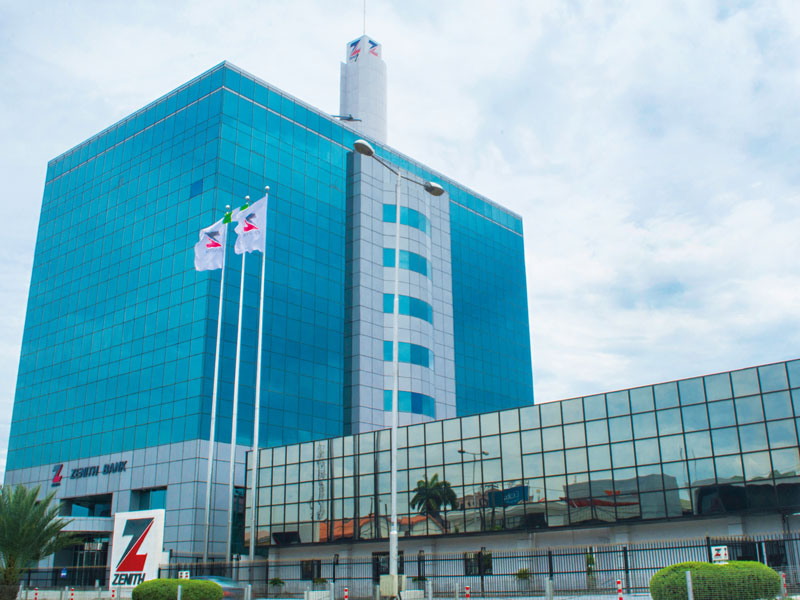
Zenith Bank is deepening its investment in education through digital infrastructure, renewable energy and youth development initiatives aimed at helping Nigerian students acquire the tools needed to compete in an increasingly technology driven economy.

Also read: Jigawa to Benefit as PLANE Launches English Language Training for 337 Teachers
One of the major interventions highlighted is the construction of a purpose built ICT Centre at the University of Delta in Agbor, Delta State.
The facility has 204 computer workstations, alongside a server room, media room, reception area and other supporting infrastructure. It also includes a 250KVA generator, a 200KVA transformer and inverter facilities designed to support reliable operations.
The intervention comes at a time when universities across Nigeria are increasingly embracing computer based examinations, online learning and other digital academic platforms.
For students, access to computers goes beyond examination preparation. It provides opportunities to develop practical digital skills that are increasingly required in higher education and the workplace.
Zenith Bank has also addressed the electricity challenge affecting digital learning by providing a 30kW solar hybrid system for the ICT Centre of Lagos State University of Education in Ijanikin.
The system is designed to provide a more dependable power supply by combining solar energy, battery storage, electricity from the national grid and generator support.
The bank’s educational interventions extend beyond ICT infrastructure. Its programmes have included digital skills development, scholarships, school renovations, vocational training and financial literacy initiatives.
Through partnerships supporting technology competitions and digital skills programmes, students from different parts of Nigeria have also received opportunities to test their abilities and gain exposure to international standards.
The broader objective is to reduce the digital divide that continues to affect students who have limited access to computers, reliable electricity and modern learning facilities.
The University of Delta project is particularly significant because the centre was designed as a comprehensive technology environment rather than simply a room filled with computers.
The facility’s supporting infrastructure is intended to make it useful for learning, examinations, professional training and certification activities.
The interventions highlight a growing reality in Nigerian education: access to classrooms and textbooks alone is no longer enough.
As digital learning, computer based assessment and technology driven employment continue to expand, students need access to computers, reliable electricity and practical digital skills.
Zenith Bank’s investments therefore place corporate support at the centre of a wider conversation about preparing Nigeria’s young population for the demands of the digital economy.
Leave a Comment