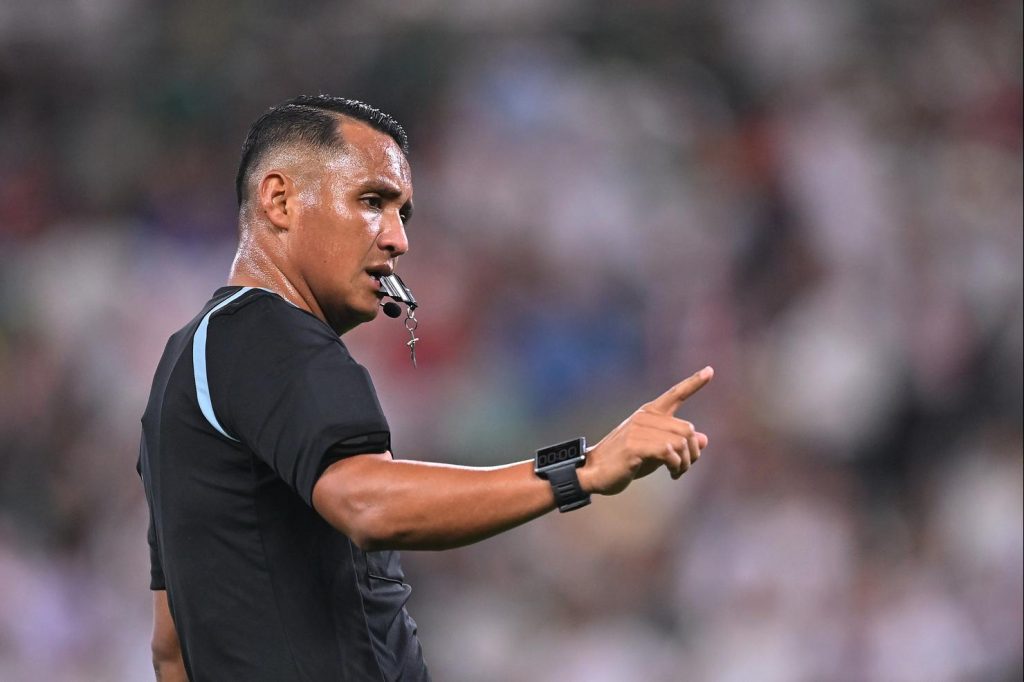
FIFA has confirmed a series of significant law changes that will be introduced at the 2026 FIFA World Cup as football authorities move to curb time-wasting, improve officiating standards, and enhance the flow of matches.

Also read: NSSF World School Athletics Trials Ignite Abeokuta
The new regulations, approved by the International Football Association Board (IFAB), will be implemented during the tournament, which will be jointly hosted by the United States, Canada, and Mexico.
FIFA’s Head of Refereeing, Pierluigi Collina, said the adjustments are designed to make matches more efficient, discourage unsporting behaviour, and strengthen the accuracy of officiating decisions.
The changes come as FIFA prepares for the first-ever 48-team World Cup, the largest edition of the competition in history.
FIFA Unveils 10 New Rules for 2026 World Cup
 Sports" title="FIFA Unveils 10 New Rules for 2026 World Cup">
Below are the 10 key rule changes set to take effect at the tournament.
1. Five-Second Throw-In Rule
Players will be given a maximum of five seconds to take a throw-in once instructed by the referee. Officials will use a visible countdown, and failure to restart play within the allotted time will result in possession being awarded to the opposing team.
2. Five-Second Goal-Kick Rule
Teams attempting to delay goal-kicks will also be subject to a visible five-second countdown. If the time limit expires, the opposing team may be awarded a corner kick as a sanction for deliberate time-wasting.
3. Faster Substitution Process
Players being substituted must leave the field within 10 seconds and use the nearest exit point.
Any player who fails to comply could delay the entry of their replacement until the next stoppage in play after one minute has elapsed.
4. One-Minute Medical Absence
Players who receive treatment on the pitch will be required to remain off the field for 60 seconds after play resumes.
The rule is intended to prevent unnecessary stoppages and discourage players from using injuries to disrupt the flow of the game. Goalkeepers and certain exceptional injury cases will be exempt.
5. VAR to Review Second-Yellow Red Cards
For the first time, Video Assistant Referees will be permitted to review dismissals resulting from a second yellow card if a clear and obvious error has occurred.
The change is expected to reduce controversial send-offs during crucial matches.
6. VAR to Correct Mistaken Identity
Officials will also be able to intervene when the wrong player is shown a yellow or red card.
The rule aims to eliminate incidents where disciplinary action is mistakenly directed at an innocent player.
7. VAR Reviews for Incorrect Corner Decisions
Competitions may now authorise VAR intervention when a corner kick is clearly awarded in error.
The review must be immediate and should not cause significant disruption to the match.
8. Review of Attacking Fouls Before Set-Pieces
VAR officials will have the authority to examine attacking fouls that occur before corners or free-kicks if the subsequent play results in a goal, penalty, or serious disciplinary offence.
The measure is intended to ensure that crucial incidents are not overlooked during the build-up to major match-changing moments.
9. Red Cards for Concealing Conversations
Players who deliberately cover their mouths during heated confrontations or discussions with opponents may now face a straight red card.
The rule forms part of FIFA’s broader effort to combat discriminatory behaviour and improve transparency on the field.
10. Restrictions on Goalkeeper Tactical Timeouts
Teams will no longer be permitted to gather for tactical discussions when a goalkeeper remains on the ground claiming injury.
FIFA believes the practice has increasingly been used to waste time and provide unofficial coaching breaks during matches.
The governing body believes the new measures will help reduce unnecessary delays and improve the overall viewing experience for fans.
Excessive stoppage time became a major talking point during recent international tournaments, prompting football lawmakers to explore ways of keeping matches moving while maintaining fairness.
With the 2026 World Cup expected to feature more teams, more matches, and larger global audiences than ever before, FIFA hopes the updated regulations will create a faster, more transparent, and more competitive tournament.
Leave a Comment