By Asma’u Yusuf — The teacher with the loud voice
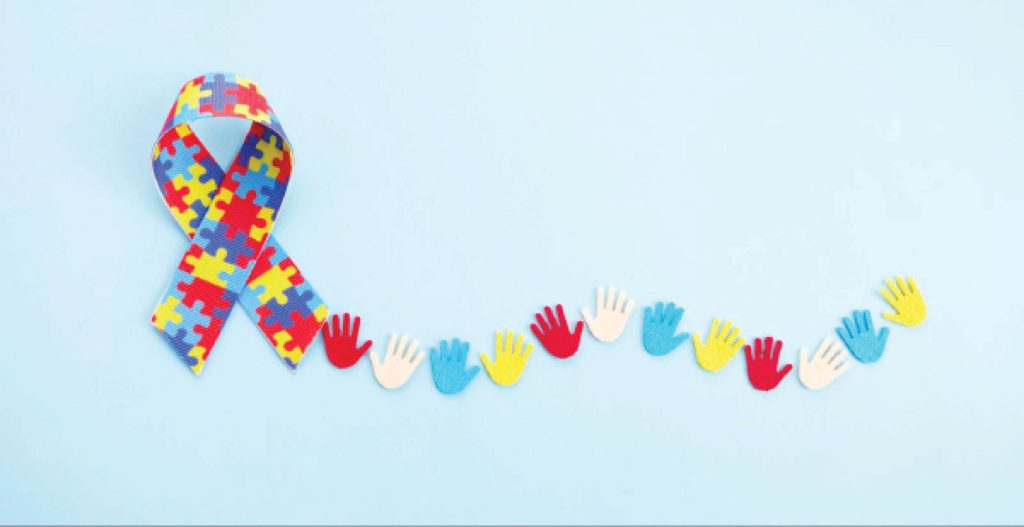
April was Autism Awareness Month, and all over the world, conversations were happening. Campaigns, school activities, and movements like Spark a Spectrum encouraged people to learn more and do better.
Also read: Making a tasty grilled Tilapia fish
But before all that, I asked a simple question.
Did you actually know what autism was? Or was it just one of those words you had heard, nodded at, and moved on from?
Let’s start from somewhere real.
Once upon a time, there was a beautiful boy born into a loving family. By the age of two, he could say “Daddy” and “Mummy”, run faster than anyone could catch him, and laugh in a way that made your chest hurt from smiling too hard. Everyone who met him loved him. He was a joy—a little spark that lit up every room.
But as he grew, things started to feel different. Not bad. Not wrong. Just different.
Sometimes he didn’t look people in the eye. Sometimes he repeated words over and over. Loud sounds unsettled him. Changes in routine made him anxious. And sometimes, he just wanted to be alone.
People didn’t always understand. Teachers got frustrated. Classmates teased him. Schools rejected him—they didn’t want someone like him “spoiling their image”. Even adults who meant well would ask why he couldn’t just be like other children.
And still, he kept being himself, moving through the world in his own way.
There were days he was calm and quiet—almost too quiet. And then there were days he would scream until it felt like the roof would come off. He would bang his head, flap his hands, and cry endlessly, and nothing seemed to calm him down.
Nothing, except his mother.
She would hold him, rock him gently, sometimes for hours, until his body settled and the storm passed. This became their routine. Again and again. Day after day.
His parents were exhausted and confused. They searched everywhere for answers—hospitals, clinics, herbal homes—anywhere that might help.
Then, at three and a half, they finally got one.
Autism Spectrum Disorder.
They didn’t know whether to feel relieved or afraid. At least now they had a name for it. But what did it mean? And what were they supposed to do next?
So what is autism?
Autism, or Autism Spectrum Disorder, simply means the brain works differently. It affects how a person communicates, how they understand the world, and how they respond to sounds, people, emotions, and change.
It is not a sickness. It is not bad behaviour. And it is not caused by bad parenting.
It is simply a different way of experiencing life.
For that little boy, it meant sounds could feel louder than they should. Too many things happening at once could feel overwhelming. Words didn’t always come easily, and when they did, they didn’t always come out the way people expected.
So he expressed himself in the only way he could. And people misunderstood him—because we rarely understand what is different, or we don’t try hard enough to.
This is where I want you to come in.
It is very easy to judge what you don’t understand. Very easy to laugh. Very easy to label. Very easy to walk away.
But I am asking you to be different.
Be the one who pauses. Who looks again? Who listens and observes before deciding. Have a little more patience.
If people had looked closer, they would have noticed something else about that boy.
He created.
He could sit for long periods, focused, drawing and building ideas in his own way. Not for attention. Not for praise. Just because his mind was full of stories.
He began to shape those stories into something of his own—characters, scenes, and imagination flowing freely.
He even gave it a name: Comic Chaos.
And if you really paid attention, you would realise there was nothing chaotic about it. It was thoughtful. It was detailed. It was simply a different kind of brilliance.
And then, somewhere else in this same country, another story is unfolding.
A young boy, also on the spectrum, has chosen not to hide but to be seen. He is riding his bicycle across parts of southern Nigeria, raising awareness and helping people understand what autism really is. His name is Kanyeyachukwu Tagbo-Okeke.
He is not doing it because it is easy. He is doing it because it matters. Because people need to see differently.
And that is really what this is about. It is not just autism awareness. It is about how we choose to see people.
In your class right now, there is someone you don’t fully understand. Someone you may have already judged. Someone you avoid, laugh at, or ignore.
But what if you are wrong?
What if they are not difficult, just different?
What if they are not strange but are experiencing the world in a way you haven’t tried to understand?
The world would be very boring if we were all the same.
The same thoughts. The same behaviours. The same ideas.
It is our differences—our uniqueness, even our quirks—that make life interesting, creative, and meaningful.
So instead of pushing differences away, learn to embrace it. Join the movement. Be part of something better. Spark a Spectrum is not just a campaign. It is a reminder that awareness starts with you.
Book nook
If you want to understand people better, start with stories:
The Girl with the Louding Voice — Abi Daré
Wonder — R. J. Palacio (and no, don’t rush to the movie first)
El Deafo — Cece Bell
Children of Blood and Bone — Tomi Adeyemi
My Sister, the Serial Killer — Oyinkan Braithwaite
Comic Chaos — Farid Bello (this one is special… just keep following Teen Trust for updates )
Final word
Have a little more patience.
Look again.
Listen more.
Try to understand before you judge.
Because sometimes, the people we misunderstand the most are the ones we simply haven’t taken the time to see properly.
Leave a Comment