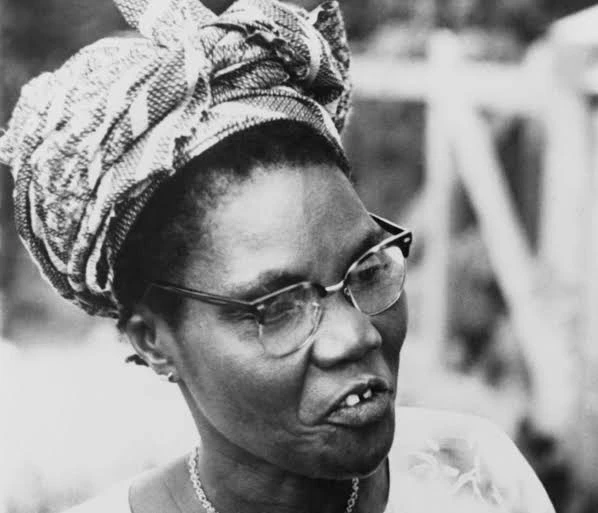
By Aisha Lawal
Funmilayo Ransome‑Kuti was a pioneering Nigerian educator, nationalist, and women’s rights activist who founded the Abeokuta Women’s Union, led mass protests that forced the Alake of Egbaland to abdicate in 1949, and became a major figure in Nigeria’s independence and feminist movements.
Also read: Making vanilla ice cream at home

Born originally with the name Frances Abigail Olufunmilayo Thomas. She was born on 25th October 1900 to Chief Daniel Olumeyuwa Thomas in Abeokuta, Ogun State, Nigeria. At that time it was part of the southern Nigerian protectorate under the British rule.
She was among the first six girls to be admitted into Abeokuta Grammar School in 1914. At that time, it was very uncommon for girls to go to school, but Funmilayo’s parents believed that education was meant for
both boys and girls. She later attended Wincham Hall School for girls in England from 1919 to 1922.
She married Reverend Israel Oludotun Ransome-Kuti in 1925. They had four children together, Dolupo, Olikoye, Olufela and Bekololari. Her husband was one of the co- founders of the Nigerian Union of Teachers.
During her marriage, she established one of the first pre-schools in Nigeria and also organized classes for illiterate women. Later on, during her marriage, she and her husband bought a car
from England and shipped it to Nigeria, making her the first woman in Abeokuta to drive a car.
Though she was popularly known as the first woman to drive a car in Nigeria, there is more to her than meets the eye. She established the Abeokuta Ladies Club. It first focused on vocational skills before it moved into the political direction, and this was because of the unfair taxes that were placed on the women in Abeokuta.
The women in Abeokuta suffered from harsh tax policies and unfair collection of rice by the local authorities. Funmilayo did not like how the market women were being treated and changed the name of her club from Abeokuta Ladies Club to Abeokuta Women’s Union, extending her membership from not only middle-class or elite women to all women in Abeokuta.
The organization turned its focus to fighting unfair price control and taxes imposed on market women, with RansomeKuti as the AWU president. The union grew to represent over 20,000 members. She marched into the Oba’s palace and demanded that the tax reform be cancelled, especially the one that told the women to pay special taxes that directly went to the market supervisors.
The organization held a lot of protests against the palace and also British officials in Abeokuta. After years of fighting and protests, the taxes were brought down, and the rules were cancelled. Ransome-Kuti later went on in national and international matters, especially on giving women equal rights in politics and government, the same as men had.
Her first national act was when she went to London together with Dr Nnamdi Azikiwe to protest against the 1946 Richards Constitution. She spoke on how the rights of women were not extended as much as the men’s own. She also stated that the Europeans brought the ideology that women were lesser than men; before they came to Africa, women had equal rights to men and even wrote an article
about it “ We had Equality ‘till Britain came”.
In Nigeria, she attended a lot of conferences but saw that she was the only woman in the conference. This led her to establish the Nigerian Women’s Union to support women’s rights and enfranchisement better across the country. She did a lot of political activities, especially those in support of women’s rights.
Her husband died on the 6th of April, 1955, from prostate cancer after a prolonged
year of cancer. Though the death hit her hard, she still continued her work and built more schools in Abeokuta because of the deep love and rooted belief that both husband and wife had for equal rights to education.
Over the years, she created strong bonds with other countries’ women’s organizations and changed how the world viewed women in power. With all that happened, she didn’t give up on creating a better future for women and strongly believed in equality amongst both men and women.
Her efforts were recognised worldwide, which led to her receiving national and global awards. She died on the 13th April,1978 after two months of being in coma due to the military throwing her off from the second floor from her son, Fela Anikulapo Kuti home.
Funmilayo Ransome-Kuti, later known as Funmilayo Anikulapo-Kuti, was a pioneering Nigerian educator, nationalist, and women’s rights activist who believed in a better Nigeria and a world where both men and women were seen as equal beings.
She faced a lot of difficulties with both Nigerian and international authorities. Also popularly known as the first woman to drive a car in Nigeria and the mother of the popular musician, Fela Anikulapo Kuti.
She was not only that but more, a woman who went by her beliefs and did what was right, even with the difficulties she faced ahead, she didn’t lose her ground and showed that what a man can do, a woman can also equally do.
Leave a Comment