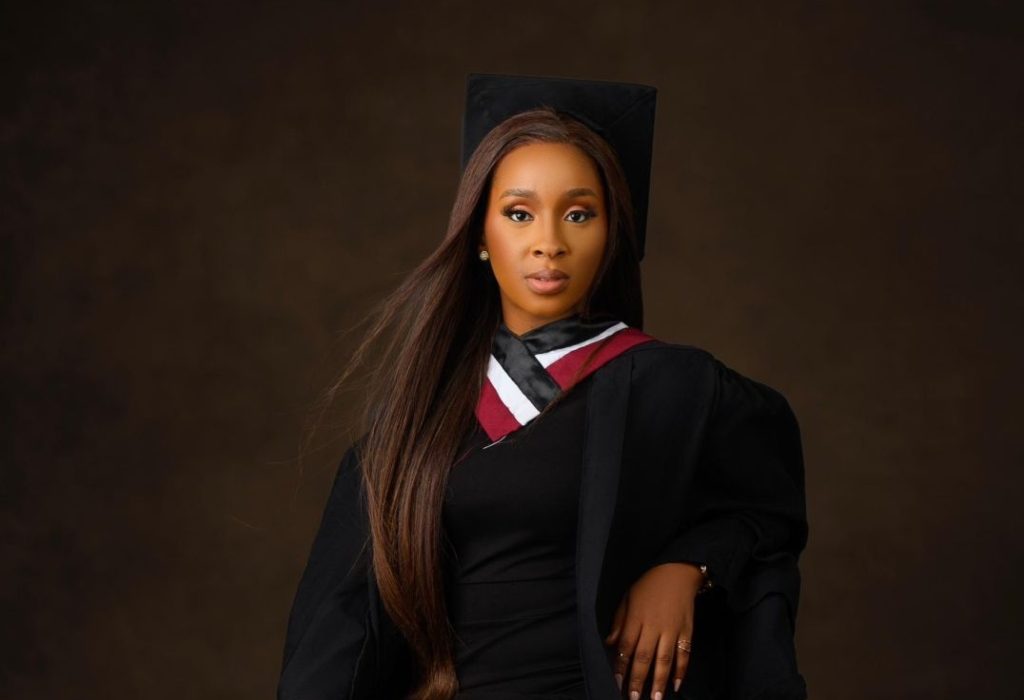
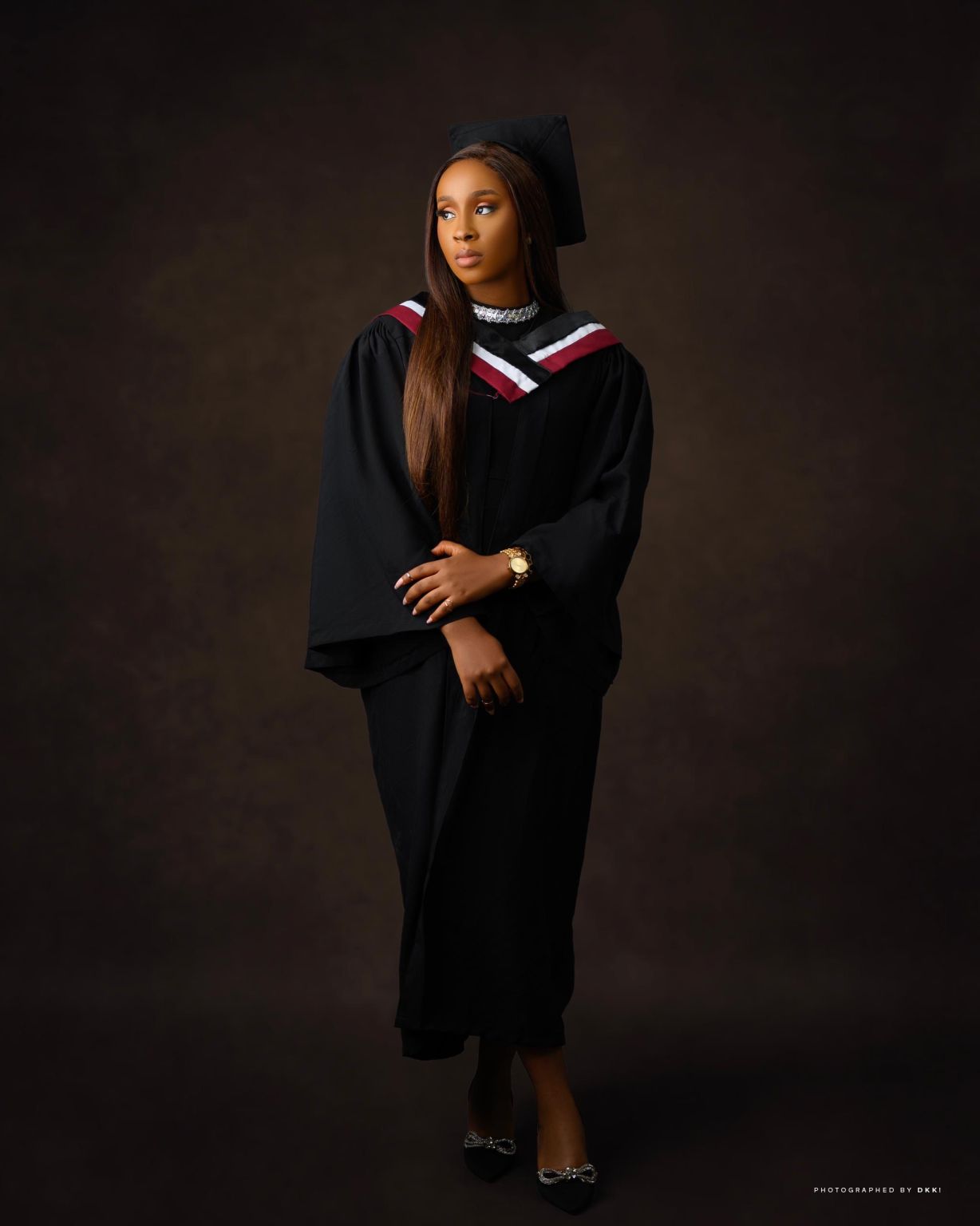
Vesna Okereke, who graduated from Babcock University in 2025 with a first-class degree in Anatomy, speaks with TEMITOPE ADETUNJI about her academic journey
When did your journey at Babcock University begin?
I gained admission to Babcock University in 2021 and graduated on July 11, 2025, with a first-class degree in Anatomy, achieving a final GPA of 5.0 and a CGPA of 4.67, emerging as the second-best graduating student in the Department of Anatomy.
Also read: My goal was to graduate with a first class — Ohanekwu Favour, OAU overall best graduating student
Beyond academics, I have interests in organisation building, human development, and holistic growth, particularly in improving people and systems to function more effectively across spheres ranging from medicine and business to education.
What was your childhood like?
I am from Imo State, Nigeria, and I come from a family that places a strong value on excellence, responsibility, and the importance of making good use of the resources available to us. Growing up with these values made me conscious of the sacrifices my parents made for my education, so I always wanted my academic performance to reflect and justify their investment in me.
My childhood was shaped by strong family values, discipline, and high expectations. I grew up with the understanding that education was important and that I was expected to give my best in whatever I pursued. I was also known in my family as “the smart one,” and that identity influenced how I saw myself for many years. I am the second of four children.
How old are you?
I am 21 years old.
What kind of student were you during your secondary school years?
I was a very serious and academically driven student. I was accustomed to doing well and studying hard, which generally produced good results for me. However, one lesson university taught me was that being intelligent is not enough; you must also know how to adapt your learning system to a new environment.
What influenced your decision to study Anatomy?
Interestingly, Anatomy was not my first choice. I initially applied to study Medicine and Surgery, but I was offered Anatomy with the possibility of transferring to Medicine if I maintained at least a 4.5 CGPA in my first year.
That possibility motivated me strongly, and I finished my first year with a 4.73 CGPA. Although the transfer eventually did not happen, continuing with Anatomy became one of the most transformative experiences of my life.
When did your perception of Anatomy begin to change?
Initially, my attraction to Anatomy was largely connected to Medicine because I saw it as a possible pathway into medical school. I did not begin the programme with the expectation that Anatomy itself would become such an important part of my journey.
However, over time, I developed a deeper appreciation for the discipline and its importance in medicine and research. I came to understand that Anatomy was more than dealing with cadavers, as it is often stereotyped in Nigeria.
Instead, it is a field that opens the door to multiple research possibilities in science, including histology, histopathology, and cell biology, and the list continues.
Most importantly, I met amazing mentors who shaped my understanding in ways I cannot describe.
At what point did you begin taking the goal of graduating with first class seriously?
I became much more intentional about graduating with a first class after I experienced a significant decline in my second year. That period forced me to reassess myself, my study methods, and my motivation. I realised that I could not continue relying on the methods that had worked for me in secondary school. I needed a more sustainable system and a deeper reason to keep going.
Was achieving a perfect GPA something you deliberately set out to accomplish from your first year?
I wanted to excel from the beginning, but I would not say that a perfect 5.0 CGPA was my defining goal from the first year. In fact, my initial motivation was to maintain the required CGPA to transfer to Medicine.
As my journey progressed, my focus shifted from simply achieving a particular number to understanding my coursework, developing consistency and discipline, and becoming the best version of myself overall.
What study methods worked best?
Initially, I relied heavily on memorisation and cramming because those methods had worked for me in high school. Eventually, I realised I needed to understand rather than simply memorise. I began paying close attention to my lecturers: their thought processes, the concepts they emphasised, how they explained topics, and how they expected answers to be presented.
Sometimes, I would jokingly say that I only attended lectures not to understand the coursework, but to study and understand the lecturer. Regardless, I took time to write detailed notes and revise consistently. That approach helped me study more intelligently rather than simply studying for long hours.
What aspects of Anatomy did you find most challenging?
The volume and depth of information were challenging, especially because Anatomy requires both understanding and retention. The challenge wasn’t just learning individual concepts but retaining and connecting a large amount of information across different areas. Beyond the coursework itself, maintaining consistency during periods of disappointment and self-doubt was also challenging.
How did you handle courses or topics that you struggled to understand?
I learnt not to be ashamed of not understanding something immediately. I went back to the material, broke difficult concepts into simpler parts, watched simpler YouTube videos, and synchronised them with the lecturer’s explanations. I also focused on understanding the reasoning behind a concept rather than memorising isolated facts. This method made difficult topics much more understandable.
How many hours did you typically dedicate to studying outside the classroom?
I did not operate with a rigid number of study hours every day. I focused more on being intentional and productive with the time available to me.
I prepared for examinations by consistently reviewing my lecture notes after each day’s classes; I would identify areas I did not understand and form possible questions from the parts the lecturer emphasised, particularly the major areas.
I learnt that effective studying was more about consistency and understanding than simply counting hours.
What was the most challenging period of your undergraduate journey academically, and how did you get through it?
My second year was the most difficult period academically. After the disappointment of not being able to transfer to Medicine, my performance began to decline. I struggled with self-doubt, anxiety, and disappointment, and my social environment did not help matters. At some point, returning to school felt like a burden, and I considered leaving.
The major turning point came on December 31, 2025, when I experienced a personal breakdown and began questioning my purpose and direction. I turned to God and began intentionally seeking Him through prayer and Bible study.
On February 16, 2026, after listening to a sermon by Pastor Jerry Eze, I had what I describe as a personal encounter with Jesus. That experience gave me a renewed sense of purpose and a sustainable drive to continue.
What sacrifices did you have to make to achieve a 5.0 CGPA?
The biggest sacrifices were related to discipline and limiting my social life. I had to become intentional about my time, environment, habits and what I allowed to occupy my mind. I also had to let go of comfort and the assumption that I already knew how to succeed. I had to be willing to unlearn, relearn and adapt.
How did you balance your academics with your social life and other activities?
I learnt that balance does not necessarily mean always giving everything equal attention. There were seasons when academics required more of my attention. I became more intentional about the people around me, how I spent my time and the activities I allowed into my routine. The goal was to ensure that my social life did not compromise my purpose.
Source: Punch Newspaper
Leave a Comment