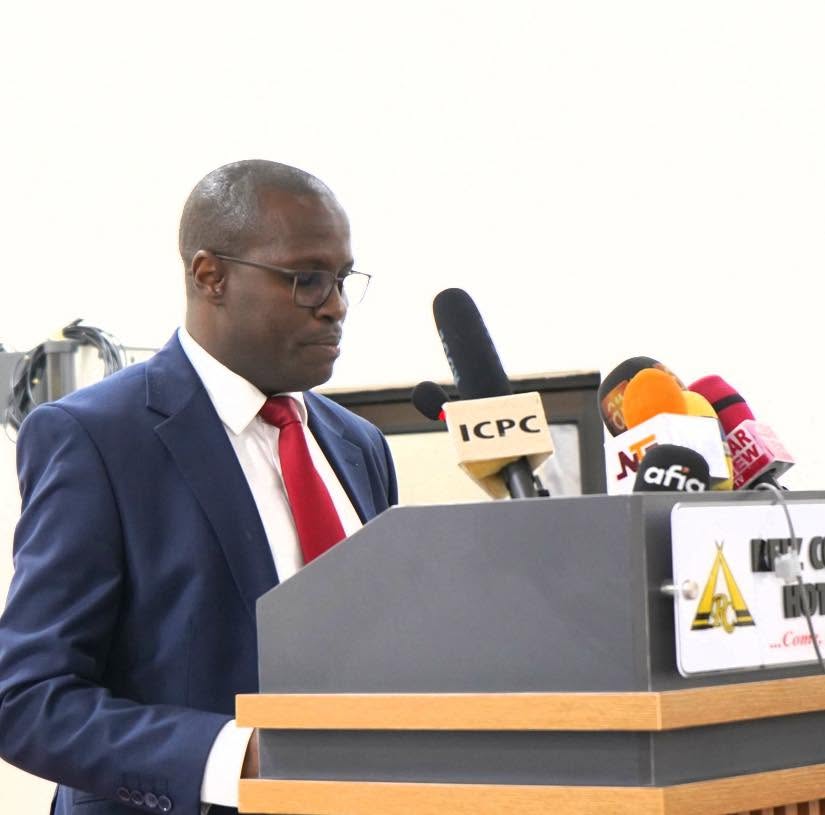
Corruption is often associated with politicians and public officials, but its roots can begin much earlier, in classrooms, homes and everyday choices made by young people. From cheating in examinations to online fraud and dishonesty, the values children develop while growing up play a significant role in shaping the kind of adults they become. In this interview with Teen Trust, Director of Public Enlightenment of the Independent Corrupt Practices and Other Related Offences Commission (ICPC), Mr Demola Bakare explains what corruption really means, why integrity matters from a young age, and how parents can guide children in the digital age.
By Rosemary Etim Bassey
Also read: Education begins at home
How would you explain corruption to a teenager?
Corruption can be described as the abuse of a privileged position for personal gain. People often think corruption exists only in the public sector, but that is not true. It can happen in families, private organisations, or anywhere there is a position of trust. Whether you are a father, mother, child, teacher or public officer, if you abuse the power entrusted to you for your own benefit or for the benefit of others, you are engaging in corruption. For children, corruption basically involves dishonesty, lack of integrity and the absence of moral values.
At the teenage level, can corruption be seen in actions such as cheating in examinations, bribing for grades or lying about qualifications?
Absolutely. Those actions clearly describe corruption in real life. Once a person is dishonest, they can easily engage in cheating, lying and other forms of misconduct. The foundation of corruption is a lack of honesty, integrity and moral values. Cheating in examinations is a form of criminal behaviour, and it all begins with dishonesty.
Online scams and internet fraud are becoming increasingly common among teenagers and young people. What advice would you give teenagers to avoid getting involved in such activities?
We cannot ignore the fact that this is the digital age. The present generation was born into technology. Unlike my generation, which had to adapt to computers later in life, today’s children grow up surrounded by digital devices.
Unfortunately, while they were learning how to use technology, society’s moral values were declining. Many young people learned how to use technology without learning how to use it honestly.
That is why cybercrime has evolved from simple email scams to Yahoo, Yahoo Plus and even more dangerous forms involving ritual beliefs and organised crime.
Technology itself is not the problem. It is a useful tool that can greatly benefit society. The problem is using it dishonestly.
We need to teach children to use digital platforms responsibly. Social media, for example, has both positive and negative sides. Fake news is everywhere today, and sometimes it is difficult to know what to believe.
Government, parents and society must place greater emphasis on teaching children the positive use of technology so they embrace its benefits instead of its dangers.
Do you think giving children early access to social media, gadgets and money contributes to these problems? Should parents monitor them more closely, especially considering the flashy lifestyle often displayed online?
Yes, it can be a contributing factor, but access itself is not the real problem. Take Japan, for example. Children are introduced to technology from a very young age because there is a clear purpose behind it. They are taught how to use it productively.
In our own society, many parents buy expensive gadgets simply as status symbols. We should ask ourselves why we are giving our children these devices.
If I give my child an iPhone, am I simply buying it to take pictures, or am I guiding them on how to use it responsibly?
Parents must supervise what children do online. Many children are exposed to cybercrime and even the dark web at very young ages because nobody is guiding them. During one of our cybercrime sensitisation programmes, I discovered that many parents simply hand children devices without any supervision. Technology can be used positively or negatively. That is why children need guided access. If you do not introduce technology to them responsibly at home, they will learn about it elsewhere, possibly in unhealthy ways. It is better to introduce it yourself and guide them properly.
What values and habits should teenagers develop to become responsible and trustworthy adults?
This question brings me to one of the major things we do at the ICPC.
We realised that children are both our present and our future, so we deliberately focused on teaching values. Working with the Nigerian Educational Research and Development Council (NERDC) and other stakeholders, we developed the National Values Curriculum.
The curriculum promotes twelve important values, including:
- Honesty
- Integrity
- Contentment
- Discipline
- Self-control
- Respect
- Right attitude to work
- Citizenship
- National consciousness
- Courage
- Justice
- Responsibility
A contented child, for example, will not envy what others have or think of stealing.
These values were infused into subjects like English language, business studies, religious studies and civic education so that children would learn them naturally throughout their education.
We also established anti-corruption clubs in primary and secondary schools, the Student Anti-Corruption Vanguard (SAV) in tertiary institutions and similar programmes within the National Youth Service Corps (NYSC).
What children learn today stays with them throughout life. As the Bible says, “Train up a child in the way he should go, and when he grows up, he will not depart from it.”
How can children participate in the fight against corruption even though they are not in positions of authority?
The fight against corruption belongs to everyone. Children can join anti-corruption clubs in primary and secondary schools. University students can join the Student Anti-Corruption Vanguard, while corps members can participate through Community Development Service groups.
As they grow older and begin working, they can also become involved through anti-corruption and transparency units in government institutions.
Every Nigerian has three responsibilities:
- Reject corruption.
- Resist corruption.
- Report corruption.
If you see corruption and ignore it, then corruption continues unchecked.
Parents should also model these values because children learn from what they see.
Looking back at your own teenage years, what lesson about honesty or integrity has stayed with you throughout your career?
One lesson that stayed with me came from my parents. Whenever I was leaving home, especially when I went to university, they would always tell me, “Remember whose son you are. Don’t let anyone call us to a police station.” Those words guided my decisions.
At university, I was invited by some friends to become involved in counterfeiting Nigerian currency. They asked me to obtain mercury because my father worked at the mint. Instead of helping them, I told my father what had happened. He advised me to stay away from them. Eventually, those individuals were arrested. During investigations, my name came up because they had approached me, but I was cleared because I never became involved. Later, while at my former place of work, I also faced opportunities to engage in dishonest practices involving advertising commissions. I refused because I had been taught integrity from childhood. Those same values eventually led me to join the ICPC.
Parents must understand that the values they teach today shape the future of their children. Personally, I do not allow my son unrestricted access to the internet while he is still in secondary school. If he needs to use the internet for schoolwork, he does so under our supervision. Technology is essential, but children need guidance so they can use it responsibly without losing their values.
Leave a Comment