By Asma’u Yusuf
The teacher with the loud voice
Let’s start with a simple truth: there’s nothing wrong with wanting to be global — as long as you don’t forget where your journey began.
Also read: Essay competition: 14-year-old student to receive N2 million scholarship
Because before there was Wi-Fi, there were stories.
Before “influencers”, there were griots.
Before “content creation”, there were moonlight tales, talking drums, and names that carried entire histories in them.
Now, here we are—a generation of Nigerians who can code in Python and still speak a little Pidgin; who wear sneakers with Ankara; who love Afrobeats, K-drama, and amala all in the same week.
It’s a beautiful chaos—but sometimes, in trying to fit into the “global” world, we forget how powerful it is to be rooted.
Global doesn’t mean western
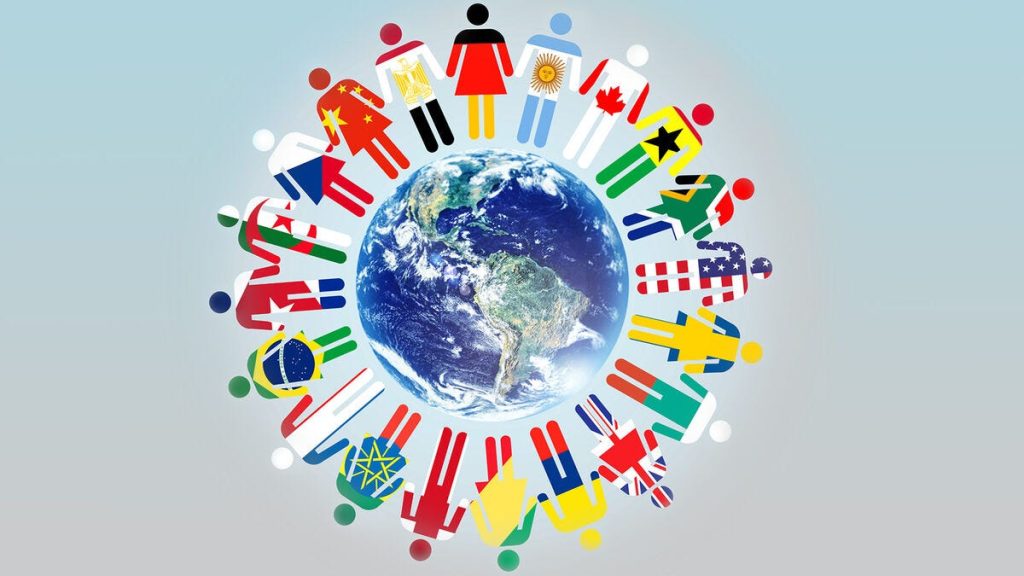
Let’s be honest — globalisation can feel like a wave. One that pulls everyone toward the same direction: same accents, same slang, same filters.
You open TikTok, and suddenly everyone sounds like they grew up in Los Angeles, eats sushi, and says “bro” every three seconds.
But ‘global’ doesn’t mean ‘Western’. It means connected.
It means you can love Coldplay and still dance to Davido.
It means you can say “what’s up” and “sannu” in the same sentence.
The world doesn’t need another copy. It needs your original rhythm — your accent, your history, your laughter that sounds like home.
Because what makes the world interesting isn’t sameness; it’s difference.
Names that tell stories
If you’ve ever been tempted to shorten your name just so it’s “easier to pronounce”, pause for a moment.
Your name is a poem, not a problem.
It’s geography, history, and hope rolled into syllables.
Think about it — Chidimma means “God is good.” Al-Amin means “trustworthy”. Oluwaseun means “thankful”. Zainab means “fragrant flower”.
Every time someone says your name right, your ancestors smile.
So the next time someone stumbles over your name abroad or online, don’t apologise. Teach them. Slowly, proudly.
Because you’re not the one with the difficult name — they just haven’t learnt it yet.
Culture is not costume
There’s nothing wrong with wanting to be trendy. We all love a good hoodie and sneakers moment. But don’t let culture become something you only wear on “Cultural Day”.
Culture is in how you greet, how you eat, and how you show respect.
It’s in the rhythm of your walk, the flavour in your jokes, and the patience in your storytelling.
When your grandmother speaks in proverbs, that’s not “old people talk”. That’s philosophy wrapped in humour.
When your father insists on greeting elders properly, that’s not stiffness — that’s dignity, passed down through generations.
You carry culture in your gestures, in your gratitude, and in your gumption.
Don’t trade that for trends. Let both coexist. You can rock braids and books, sneakers and suya. Be global — but rooted.
Digital citizens, cultural ambassadors
Her’s the funny thing about being Nigerian: no matter where you go, people will ask about jollof. Or Wizkid. Or that “your Nigerian English that sounds like singing.”
So whether you like it or not, you represent more than yourself.
That doesn’t mean you have to carry the whole flag on your head — it just means remember who you are, online and offline.
Be proud to say, “I’m Nigerian.”
But more importantly, act like it means something.
Work hard. Speak kindly. Be excellent.
Because somewhere in the world, your small act of integrity may be the only “Nigeria” someone ever sees.
A quick history reminder
When Nigeria’s founding fathers imagined this country, they didn’t see perfection. They saw potential — a mosaic of tribes, faiths, and futures bound by hope.
That’s why our anthem doesn’t say “to build a perfect nation”—it says “to build a nation.”
Building means it’s still in progress.
You are part of that progress.
Every time you refuse to mock an accent, you build.
Every time you correct misinformation about your culture, you build.
Every time you carry your identity with grace, you build.
Your roots are not a limitation
In a world that moves fast, your roots are your anchor.
They remind you that worth isn’t in accent or algorithm — it’s in authenticity.
That your intelligence isn’t measured by how Western you sound, but by how wisely you think.
And when you travel, study, or work abroad, don’t shrink. Walk tall.
Because even when you’re surrounded by skyscrapers, you carry the Savannah in your soul.
You are not less global because you are African.
You are the reason global exists.
Challenge of the month: “local, yet global”
This month, do one of these:
– Ask an older relative to teach you a proverb and post it with its meaning.
– Cook a traditional meal — or just learn its story.
– Find out the meaning behind your name or your village’s name.
– Share a short video about one cultural practice you love.
Let’s flood the internet with pride, not pretence.
Book nook: Rooted and Radiant Reads
1. Akata Witch by Nnedi Okorafor – A Nigerian fantasy that celebrates difference and identity.
2.Homegoing by Yaa Gyasi – A story of heritage, loss, and the threads connecting generations.
3. An Orchestra of Minorities by Chigozie Obioma – A haunting Nigerian tale that explores love, destiny, and culture.
4. The Girl Who Can and Other Stories by Ama Ata Aidoo – Classic African tales of self-discovery and strength.
Final word — from the teacher with the loud voice
Being global means reaching far.
Being rooted means remembering home.
The world will keep changing — slang, tech, trends — but your roots?
They’ll keep you standing.
So learn the codes, the cameras, the careers — but never lose the stories, songs, and soul that make you you.
Because the most powerful thing you can ever say, anywhere in the world, is still:
I am Nigerian.
And say it with a smile — loud and proud.
Leave a Comment