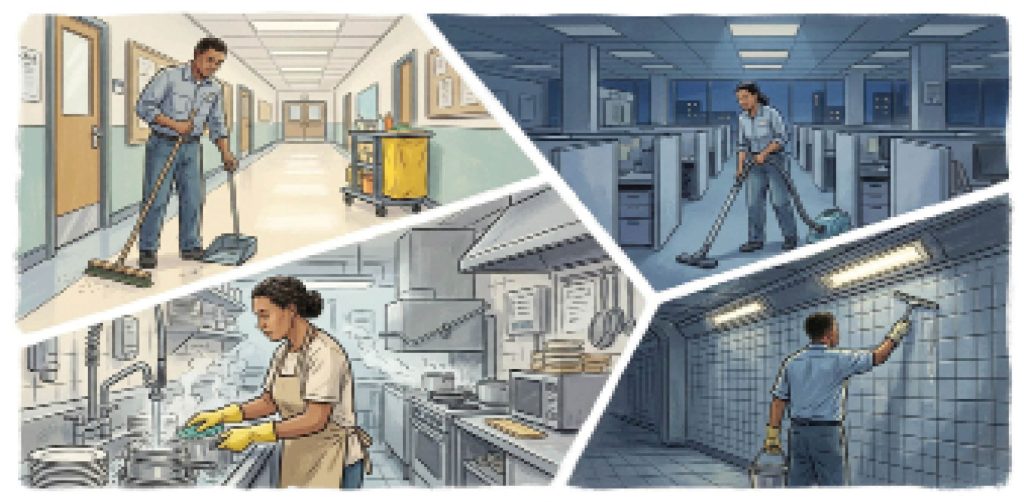
Imagine a world without cleaners, waste collectors, security guards, bus drivers or farmers. Who would keep our streets clean? Who would transport people to school and work? Who would grow the food we eat every day? Life would become difficult very quickly.
Yet, these are some of the jobs people sometimes make fun of or treat as less important. We may laugh at someone’s occupation because it does not look glamorous, does not pay much or is not considered prestigious. But have we ever stopped to think about how much we depend on the people doing these jobs?
Also read: Steps for building a natural hair
This raises an interesting question: Why do we laugh at jobs that keep society running?
The idea of a dream job
From a young age, many of us are encouraged to dream big. We are told to become doctors, lawyers, engineers, pilots, bankers, and other professionals. These are good careers, and there is nothing wrong with aspiring to become successful in them.
However, somewhere along the way, we begin to believe that some jobs are more respectable than others. A person who becomes a doctor may receive praise, while someone who works as a cleaner or a bus conductor may not receive the same level of respect.
Some teenagers even laugh when someone says they want to become a mechanic, plumber, tailor, farmer or cleaner. They may see these jobs as ordinary or believe that people who do them have failed to achieve something better.
But the truth is that every honest job has value. A person does not become important because of the title attached to their occupation. Their contribution to society matters too.
Why do we look down on certain jobs?
One major reason is the way society measures success. Many people judge success by how much money someone earns, the clothes they wear, the cars they drive or the places they visit.
Because some jobs do not offer high salaries or public recognition, people assume they are not worth pursuing.
Social media also plays a role. We often see pictures and videos of wealthy business owners, celebrities, and professionals living comfortable lives. Their lifestyles can make other careers appear less attractive.
Another reason is the belief that some jobs are meant for people who are not educated. This is not always true. Some occupations require years of training, special skills and experience. A mechanic, for example, must understand how different parts of a vehicle work before identifying and repairing a problem.
Similarly, plumbers, electricians and other skilled workers need proper training to do their jobs safely and correctly.
The people behind our everyday comfort
Think about what happens when you wake up in the morning. You take a bath, put on clean clothes, eat breakfast and head to school. Many people work behind the scenes to make these simple activities possible.
Farmers grow the food that reaches our homes and markets. Cleaners help keep our schools, hospitals and offices tidy. Waste collectors remove rubbish from our neighbourhoods, helping to prevent dirty surroundings and the spread of diseases.
Mechanics repair vehicles that transport people and goods. Electricians help install and maintain electrical systems, while plumbers make sure water flows properly through our homes and buildings.
Even security guards play an important role by helping to protect people and property.
These workers may not always receive public attention, but their absence would be felt almost immediately.
Every job deserves respect
Respecting people who do different jobs does not mean we must all choose the same careers. It simply means understanding that every honest occupation serves a purpose.
Imagine visiting a hospital where there are doctors but no cleaners. Or living in a neighbourhood where nobody collects waste. Even the most successful professionals would struggle to enjoy a comfortable life without the services provided by other workers.
A society cannot function properly when everyone wants to be a boss, but nobody wants to do the jobs that keep things moving.
We should also understand that some people choose certain occupations because they enjoy the work, while others do them to support their families. Neither situation makes them less important.
Instead of making fun of someone’s job, we should appreciate the effort, time, and skills involved in doing it.
Changing the way we think
As teenagers, we are at a stage where we are beginning to think about our future careers. While it is good to have big dreams, we must learn not to measure our worth or that of others by job titles.
If you want to become a doctor, that is wonderful. If your dream is to become a fashion designer, farmer, chef, mechanic, footballer or electrician, that is equally worth respecting.
What matters is developing the skills needed to do your work well, being responsible and finding honest ways to earn a living.
Parents, teachers and schools also have a role to play. Young people should be taught that success comes in different forms and that technical and vocational skills are just as valuable as academic qualifications.
Schools can help by organising career talks, skill exhibitions and visits to workplaces where students can learn about different occupations.
The bottom line
The next time you see a cleaner sweeping the road, a mechanic repairing a vehicle, a farmer selling produce or a waste collector doing their rounds, remember that these people are helping society function.
We may not always notice their contributions, but we depend on them more than we realise.
A job does not have to come with a big office, expensive clothes or a fancy title to be important. What matters is the value it adds to people’s lives.
So, before you laugh at someone’s occupation, ask yourself one question: What would happen if nobody was willing to do that job?
You may discover that the person you are making fun of is doing work that makes your own life easier.
Every honest job deserves dignity, and every hard-working person deserves respect.
Leave a Comment