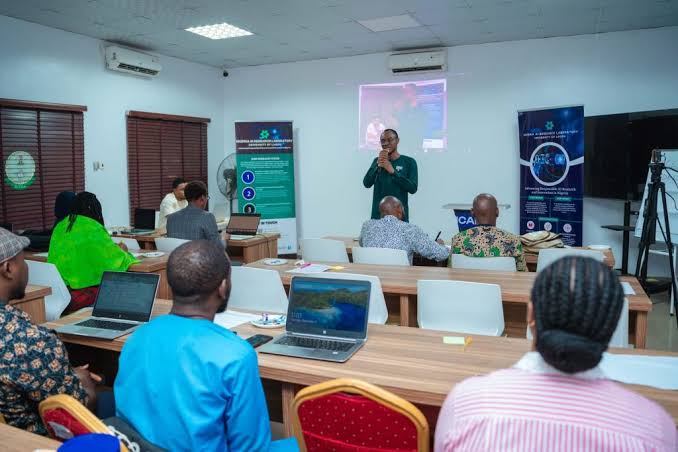
Long before artificial intelligence became one of the biggest conversations in global education, Yetunde Fawehinmi was already asking a question that continues to shape her work today: how can education respond better to the people it is meant to serve?
Also read: Visitation to orphanage home by Pupils of Yandutse
Her search for answers began in Lagos classrooms, where she founded and led LeavesGreen School and gained experience in curriculum development, teacher supervision, student assessment, parent engagement, quality assurance and school management.
Today, that journey has taken her far beyond the traditional classroom.
Fawehinmi is now a PhD candidate in Higher Education Administration at Texas A&M University in the United States, where her research is focused increasingly on the role of artificial intelligence in education.
But her vision of AI is not centred on replacing teachers with machines.
Instead, she is exploring what is known as human-centred AI, an approach that places people at the heart of technological innovation.
For Fawehinmi, artificial intelligence can support teachers by helping them identify learning gaps, organise information, provide feedback and better understand patterns in student performance.
It can also help students access learning materials in ways that respond more closely to their individual needs.
Yet she believes there are important limits to what technology can do.
Education, she argues, is deeply human. Teachers provide judgment, relationships, encouragement and understanding that technology alone cannot fully replace.
Her research therefore focuses on how artificial intelligence can strengthen education without pushing teachers and learners out of the process.
The approach is particularly relevant as schools around the world rapidly adopt AI tools.
The challenge is no longer simply whether artificial intelligence will enter the classroom. It is already there.
The bigger question is how schools can use it responsibly, ethically and in ways that improve learning without losing the human relationships that make education meaningful.
Fawehinmi’s journey from running a school in Lagos to conducting doctoral research in the United States reflects the growing global role of Nigerian scholars in conversations about technology and education.
Her work also points towards a future where the most successful use of AI may not be measured by how much technology can replace people.
Instead, the real measure may be how effectively technology can help teachers teach better and help students learn more meaningfully.
For Fawehinmi, the future of education is not simply artificial intelligence.
It is human intelligence, strengthened by technology and guided by the needs of the people education is designed to serve.
1 Comment
Damilola Feyide Turns Saturday Outreach Into Free Boarding School – Teen Trust News
[…] journey began after a visit to a Lagos remand home on Valentine’s […]
Leave a Comment